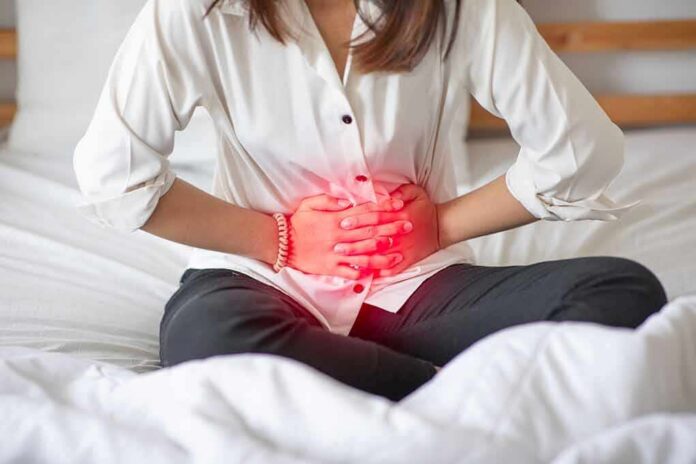
Your cramps are a built-in cleanout crew, powered by your uterus and a burst of chemical signals.
Story Snapshot
- Period cramps come from uterine muscle contractions triggered by prostaglandins.
- These contractions squeeze blood vessels, shed the lining, and move it out of the body.
- Most period pain follows this normal, useful process, called primary dysmenorrhea.
- Severe or changing pain can signal other conditions that need medical care.
The mechanism: how cramps actually move the lining
The uterus is a thick-walled organ with a smooth muscle layer called the myometrium. Near the start of a period, hormone levels shift and trigger a rise in prostaglandins. These chemicals act like local alarms. They tell the myometrium to contract, and they tell tiny blood vessels in the lining to tighten. The top layer of the lining loosens and breaks away. Repeated, wave-like squeezes push tissue and blood through the cervix and out the vaginal canal.
Those squeezes can hurt because they briefly cut blood flow to parts of the uterus. Less blood means less oxygen, which nerves read as pain. The body uses pain to get attention, but in this case the message is partly mechanical: keep the cycle moving. This is why cramps often surge on day one or two, then ease as the lining thins and prostaglandin levels fall. The process is efficient but not gentle, like a snowplow clearing a street.
Why the body “needs” this discomfort
The menstrual cycle builds a soft, blood-rich bed for a possible pregnancy. When pregnancy does not happen, the body must remove that bed and reset. Prostaglandin-driven contractions are the reset tool. They clamp vessels to reduce bleeding, detach the lining, and drive it out. Many viewers first learn this simple chain from anatomy explainers that show the uterus as a worker, not a villain. The function is clear: controlled force clears the path for the next cycle.
Calling cramps “needed” does not mean all pain is normal. Doctors describe typical period pain as primary dysmenorrhea. It comes from those same prostaglandins and contractions and usually starts in the teens or early twenties. It often improves with anti-inflammatory pain relievers because those drugs lower prostaglandin production. The American College of Obstetricians and Gynecologists explains this cause-and-effect plainly, linking prostaglandins to both muscle squeeze and vessel tightening.
When pain points to more than prostaglandins
Some period pain does not follow the usual rulebook. Pain that is severe, worsens over time, shows up between periods, or does not improve with anti-inflammatory drugs can come from other problems. Doctors call this secondary dysmenorrhea. Common culprits include endometriosis, adenomyosis, fibroids, and pelvic infection. Clear guidance exists: persistent or disabling symptoms deserve a medical exam, not more grit. The Mayo Clinic flags prostaglandins as the normal trigger but also draws that important line for next steps.
Endometriosis stands out because it often hides in plain sight. Tissue like the uterine lining grows outside the uterus and reacts each cycle. That can cause deep pelvic pain, pain during sex, bowel or bladder symptoms, and trouble with fertility. Many women go years before a correct diagnosis. A practical rule helps: if period pain is new, escalating, or unresponsive to anti-inflammatory drugs, ask a doctor about other causes, including endometriosis.
Smart relief that respects the biology
Relief works best when it targets the driver. Anti-inflammatory drugs lower prostaglandins and blunt the contraction-pain cycle. Heat relaxes muscle and improves blood flow. Gentle movement can help the uterus work without over-squeezing. When cycles are rough every month, many clinicians use hormonal methods to thin the lining and steady those chemical swings. These steps do not “fight nature.” They tune the system so the cleanout crew does the job with less collateral pain.
Bottom line for common sense care
Period cramps are not random punishment. They are the muscle and plumbing doing a reset on schedule. That function-based view frees people from fear and myths, and it lines up with what mainstream clinics teach: prostaglandins trigger contractions that shed the lining, and that hurts for many, especially on early days. Keep two truths at once: cramps can be a normal, useful sign of a healthy cycle, and severe or shifting pain is a prompt to see a professional.
Sources:
youtube.com, buzzfeed.com, ncbi.nlm.nih.gov, health.clevelandclinic.org, bestpractice.bmj.com