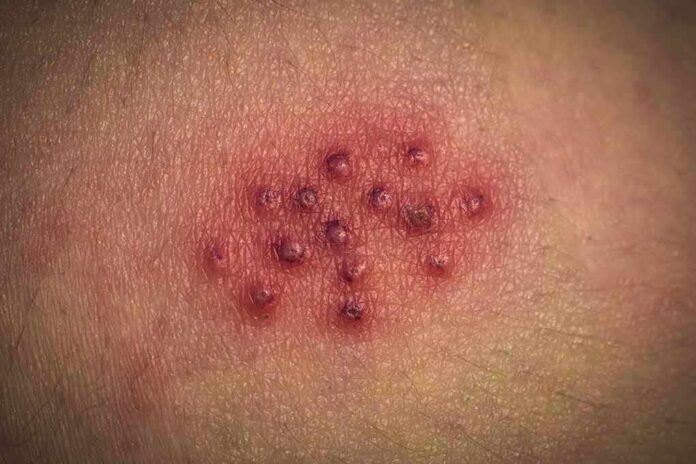
Cold sores fade on their own, but the clock to cut pain and speed healing starts at the first tingle.
Story Snapshot
- Cold sores come from the herpes simplex virus, usually on the lips.
- Outbreaks often heal in 7–10 days without treatment; some last longer.
- Antiviral creams or tablets work best when started early, at the tingle stage.
- Simple steps lower spread: avoid kissing, do not share items, wash hands.
What cold sores are and why they come back
Cold sores are small, fluid-filled blisters that form near the mouth. The herpes simplex virus causes them, most often herpes simplex virus type 1. Many people catch it in childhood through close contact like kissing. The virus stays in nerves for life and can wake up later. Triggers include stress, sun, illness, and chapped lips. The first sign is often a tingle, itch, or burn. That early warning is your best shot to act fast with treatment.
Most outbreaks end on their own in about 7 to 10 days. The Dentalk! explainer echoes that and adds that some cases stretch to two weeks or even up to four. That longer tail shows up in real life with big or multiple sores, or when the skin gets irritated. People with weak immune systems can have tougher cases and should talk with a clinician. For many healthy adults, the main goals are to shorten pain days and lower spread.
What actually helps and when to use it
Antiviral creams can help if you put them on at the first sign, not days later. A pharmacist can guide you to options and timing. For large, very painful, or frequent outbreaks, doctors often use prescription antiviral tablets. These can shave days off healing and cut virus shed if started early. The rule of thumb is simple: the sooner the better, within 48 hours of the tingle or first bump, especially for tablets, according to clinical guidance.
Pain care matters too. Cold compresses calm burning. Over-the-counter pain relievers can take the edge off. Keep the area clean and dry. Do not pick the scab; it slows healing and can spread germs. A simple lip balm with sunscreen helps prevent sun-triggered flares. Fancy supplements and miracle creams flood social video feeds, but the core tools that work are time, targeted antivirals, and basic skin care, used at the right moment.
How the virus spreads and how to protect others
The virus spreads through close skin contact and through saliva during an active sore. The risk is highest when blisters are fresh and weeping, but some spread can happen before or after. Do not kiss or share cups, utensils, lip balm, or towels during an outbreak. Wash hands after touching your face. Keep fingers away from eyes to avoid spread to the eye, which needs urgent care. These steps are simple courtesy and plain common sense that protect family and friends.
Babies, pregnant women with a new infection, people on immune-suppressing drugs, and anyone with eye pain or sores that keep coming back should get medical advice. Dentalk! notes that most sores pass in one to two weeks, sometimes longer. National guidance pegs typical healing closer to 7–10 days, with early treatment and good care making the difference. That gap is less a clash than a reminder: act early, watch the course, and escalate when severity or patterns change.
Cut your odds of the next flare
Track your triggers like sun, stress, or chapped lips. Use a daily lip balm with sunscreen when outdoors. Manage stress with sleep, exercise, and hydration. Ask your clinician about a standby antiviral plan if you get frequent flares, or if big life events like a wedding or trip loom. Start at the first tingle. Small, steady habits beat viral surprises. Most people live well with this virus by pairing smart timing with simple prevention.
Sources:
youtube.com, nhs.uk, justonenorfolk.nhs.uk, gov.uk