Terry Frawley says the intensive care unit that saved his life also felt like a torture chamber, crawling with crocodiles and witches that were never really there.
Story Snapshot
- Australian ICU survivors describe vivid hallucinations, including crocodiles, witches, and gremlins, during critical illness.
- Doctors say these experiences match ICU delirium, a recognized medical condition with an official clinical care standard.
- Research shows screening gaps mean many delirium cases go undocumented in hospitals.
- Brisbane doctors are testing redesigned ICU rooms, with early data showing a possible drop in delirium rates.
- Specialists warn the condition can leave lasting trauma long after patients leave the hospital.
Patients Describe Terrifying Hallucinations
Terry Frawley told ABC’s 7.30 program his time in intensive care felt like being trapped in a “torture chamber.” He saw crocodiles, witches, and gremlins that felt completely real. Other patients described similar terrifying visions and said they tried to rip out medical equipment because they believed they were in danger. Even Dr James Welss, an ICU specialist, said he experienced hallucinations himself while being treated.
These are not isolated stories. Doctors say the accounts match a well-known medical condition that strikes patients fighting for their lives in intensive care. The fear, confusion, and false beliefs patients describe are symptoms clinicians have studied for years, even if the public rarely hears about them in such raw detail.
What ICU Delirium Actually Is
Australia’s Delirium Clinical Care Standard defines delirium as a sudden change in behavior or thinking that requires a formal medical assessment. The standard says any sudden shift must be checked using a validated screening tool, and a clinician must document the diagnosis. This means delirium is not simply confusion. It is a specific, diagnosable condition that hospitals are required to watch for and treat.
A major review of 42 studies covering more than 16,000 critically ill patients found delirium struck nearly one in three ICU patients. That same research linked delirium to longer hospital stays, higher death rates, and lasting problems with memory and thinking after discharge. The pattern described by Australian patients fits squarely within this broader, well-documented medical picture.
Screening Gaps Leave Many Cases Undocumented
A multicenter study across Australian and New Zealand intensive care units looked at 627 patients. Only 336 of them received even one formal delirium screening. Of those who were screened, 68 were found to be delirious. That means roughly half of ICU patients in the study were never checked at all, leaving a real possibility that many delirium cases go unnoticed and unrecorded in daily hospital practice.
This screening gap matters because patients who are not formally assessed may never get their experience labeled as delirium in medical records. Their symptoms could be written off as general confusion or stress, even though doctors have a standardized tool meant to catch exactly this kind of problem early and consistently.
Hospitals Test Redesigned Rooms
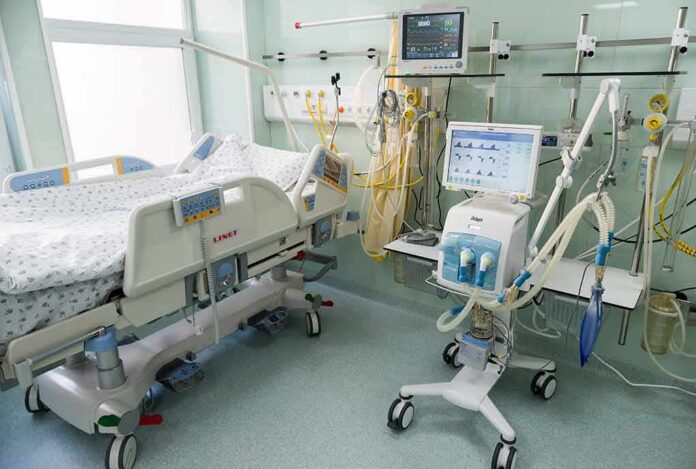
At Brisbane’s Prince Charles Hospital, a research team led by Professor John Fraser and Oystein Tronstad built what they call the “ICU of the Future.” The project targets known stress triggers like constant noise, missing natural light, and social isolation, all common features of standard intensive care units. Their goal is to reduce delirium and improve how patients recover in the months after leaving the hospital.
Early results from a randomized trial using the redesigned rooms suggest delirium rates ran about 10 percent lower among roughly 80 surveyed patients. The finding is preliminary and has not yet gone through full peer review, but it points to a possible link between a patient’s physical surroundings and how often delirium takes hold during treatment.
A quiet ICU patient can worry me more than a restless one.
Stanford TRACER tracked 60,000 hours from 280 ICU patients, at 84.8% accuracy for activity. Patients screening positive for delirium moved less, with less purpose.
Would you want a camera watching for that change? pic.twitter.com/zym0aQDi1R
— SurenMD (@DrSurenMD) November 22, 2026
Long-Term Toll on Survivors
Professor Fraser has said the fallout from ICU delirium can stretch far beyond the hospital stay, pointing to risks like post-traumatic stress, broken marriages, and an inability to return to work. These claims describe broad risks rather than detailed, long-term tracking of specific patients, but they echo what survivors in the 7.30 report said about struggling to shake the memory of what felt like real danger inside the ward.
Medical guidance recognizes that many factors can drive delirium, including infection, surgery, pain, organ failure, and the medications used to manage critical illness. That complexity means hospital design is just one piece of a larger puzzle doctors are still working to solve, even as patient accounts put a human face on a condition too often discussed only in clinical terms.
Sources:
youtube.com, abc.net.au, safetyandquality.gov.au, au.headtopics.com, ncbi.nlm.nih.gov