A nine-year-old girl who once used a wheelchair took her first steps alone after doctors built a drug just for her broken gene.
Story Snapshot
- Mayo Clinic runs a program that designs custom genetic drugs for patients with diseases so rare no other treatment exists.
- The therapy, called an antisense oligonucleotide, targets one patient’s exact genetic mistake.
- A Mayo patient gained the ability to walk and feed herself after starting an experimental drug built for her alone.
- The approach follows a path first proven by a similar drug called milasen, made for a single child in 2018.
A Clinic Built to Treat the Untreatable
Mayo Clinic has launched a clinical study called Individualized Therapeutics in Rare Genetic Disease. Doctors use it to find patients whose rare genetic disorders might respond to a custom-built drug. The team studies each patient’s specific genetic defect, then works to build, test, and eventually give that exact patient an experimental treatment designed only for them.
The program sits inside Mayo’s N-of-1 Therapeutics Program, a name that describes exactly what it does. Instead of running a trial with thousands of people, doctors run a trial of one. The patient’s own body becomes the test case. Mayo says the goal is bigger than helping single patients. Researchers want to build a model that could speed up treatment for far more people down the road.
How a Single Drug Gets Built for a Single Patient
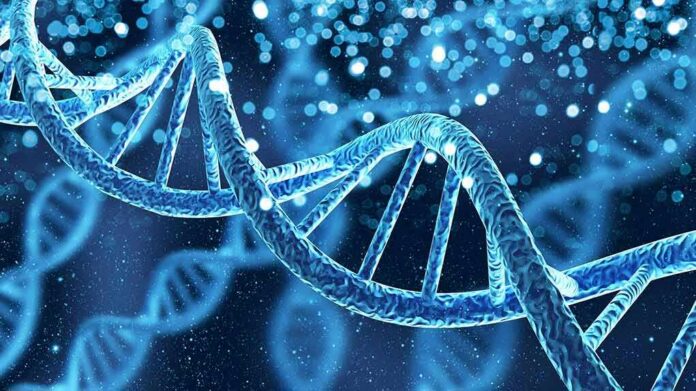
The therapy at the center of this work is called an antisense oligonucleotide, or ASO. Think of it as a short strand of lab-made genetic material. It’s built to match the exact typo in a patient’s DNA and block the bad instructions that typo creates. Mayo’s clinical genomics team first sequences a patient’s genes to find the precise mutation causing their disease.
Once scientists know the mutation, they design an ASO shaped to fix that one problem. The drug then goes through safety and toxicity testing before it ever reaches the patient. Only after that work is done does the treatment move into what Mayo calls a future N-of-1 clinical trial, a study built around exactly one person.
Early Results Give Families Real Hope
Mayo has already seen early signs the approach can work. One patient, a nine-year-old named Maggie Carmichael, started an experimental drug for her ultra-rare genetic disease. Months later, she traded her wheelchair for a walker. She took her first steps on her own and got better at feeding herself and speaking. Her case shows what individualized medicine can look like when it succeeds.
A Model With Precedent and Growing Momentum
Mayo’s approach is not the first of its kind. In 2017, researchers at Boston Children’s Hospital built a similar drug, nicknamed milasen, for a young girl named Mila Makovu. Her rare genetic defect caused severe seizures from Batten disease. Doctors moved from diagnosis to treatment in about ten months, a stunningly fast timeline for new drug development.
Milasen reduced Mila’s seizures and helped stabilize some of her symptoms, though it did not undo damage already done to her nervous system. That case proved the idea could work and helped open the door for programs like Mayo’s. A 2025 review found at least 28 patients worldwide received a mutation-specific ASO between 2018 and 2024, a small but growing track record.
Federal regulators have taken notice. The Food and Drug Administration (FDA) issued draft guidance meant to speed up approval paths for these individualized therapies, since standard large-scale trials simply aren’t possible for diseases that affect only one or two known patients. The guidance leans on what regulators call a plausible mechanism framework, letting developers show a drug should work based on biology rather than a traditional trial.
Why This Matters Beyond One Hospital
Mayo’s broader Center for Individualized Medicine has spent more than a decade building precision diagnostics based on each patient’s unique genetic makeup. The rare-disease program extends that work into treatment, not just diagnosis. For families who’ve spent years chasing an answer, a hospital willing to custom-build a drug for one patient offers something most of medicine still can’t promise: a real shot at help.
This kind of medicine moves slowly and carries real limits. Not every rare mutation has a workable target, and not every custom drug will match milasen’s results. But the direction is clear. Hospitals, regulators, and researchers are building the infrastructure to treat diseases once considered simply too rare to bother with, one patient, one gene, one drug at a time.
Families facing an ultra-rare diagnosis used to hear there was nothing more doctors could do. Programs like Mayo’s are rewriting that sentence, turning a patient’s own unique genetic flaw into the starting point for a treatment built just for them.
Sources:
youtube.com, mayo.edu, mayoclinic.org, newsnetwork.mayoclinic.org, fda.gov, pmc.ncbi.nlm.nih.gov, nature.com