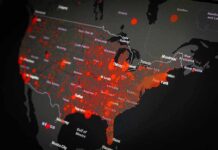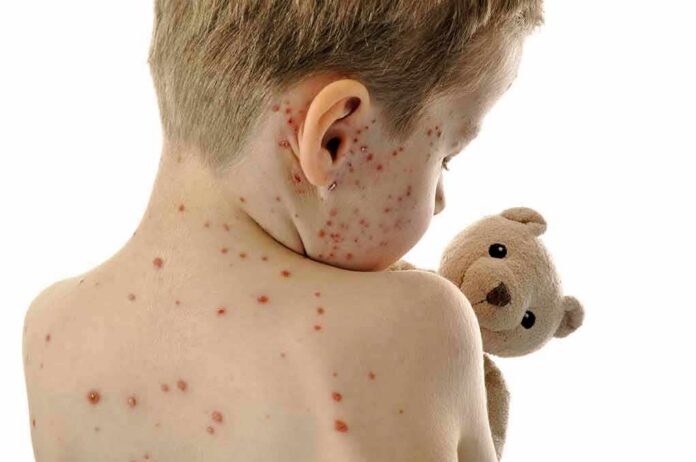
The United States has logged more than double last year’s measles cases, and health officials in the Americas are now reviewing whether the country still deserves its 26-year-old elimination status.
Quick Take
- Confirmed U.S. measles cases hit 4,852 by late October 2026, more than double all of 2025’s total of 2,289 cases
- Congressional researchers call 2026 the worst measles year in 35 years, since the 1991 outbreak
- Kindergarten vaccination rates dropped from 95.2% to 92.4%, leaving roughly 280,000 kids more exposed
- The Pan American Health Organization is reviewing U.S. elimination status, with a decision expected after its November meeting
Case Counts Surge Past Last Year’s Total
The Centers for Disease Control and Prevention (CDC) tracked 4,852 confirmed measles cases nationwide through October 29, 2026. That number already blows past the 2,289 cases counted during all of 2025. The pace is not slowing down. Congressional researchers flagged the trend even earlier in the year, noting that by late September the total had already topped anything seen since 1991.
Back in 1991, the country logged 9,643 cases before vaccination campaigns brought measles under control. Thirty-five years later, the virus is finding its way back into American communities. Health officials point to one main driver: fewer kids getting their shots on time, which gives the virus room to spread once it arrives from overseas.
Vaccination Rates Slide Below the Safety Line
Kindergarten vaccination coverage for measles, mumps, and rubella (MMR) dropped from 95.2% in the 2019-2020 school year to just 92.4% in 2025-2026. That gap may look small on paper, but it is not. The CDC says the drop left about 280,000 kindergartners more exposed to the disease this year alone. Experts have long treated 95% coverage as the threshold needed to stop the virus from spreading person to person once it enters a community.
Falling below that line does not automatically strip a country of elimination status. But it does create the exact conditions health officials have warned about for years: pockets of unprotected kids clustered in certain schools, counties, and states, waiting for one traveler to bring the virus home from abroad.
Health Officials in the Americas Launch a Formal Review
The Pan American Health Organization (PAHO) announced it would review the United States’ elimination status, with the assessment covering the year starting January 20, 2025. The review falls to PAHO’s Regional Verification Commission, a technical body that reports directly to PAHO’s director rather than to any single country’s government. The commission was set to meet in November 2026 and issue recommendations on whether the United States keeps its elimination label.
Losing elimination status would mark a historic reversal. The United States earned that designation in 2000, meaning health officials had not documented a full year of continuous, homegrown measles spread since before then. The question before the commission is narrow but serious: has the virus now taken hold here long enough, and widely enough, to count as sustained domestic transmission rather than a string of isolated outbreaks sparked by travelers?
Why the Whole Region Is Watching Closely
The United States is not alone in this fight. PAHO reported 57,666 confirmed measles cases across 17 countries and territories in the Americas through the first week of November 2026, a 4.7-fold jump over the same period last year. That regional surge raises the stakes for the U.S. review, since cross-border travel can easily reseed outbreaks even in places working hard to contain them.
The United States, which has all the resources, infrastructure, and historical capacity to maintain measles elimination – is instead bracing to lose its status this coming week. This will be the first time since it gained elimination status 26 years ago. https://t.co/h1oYpAmyH1
— Dr. Catharine Young (@DrCatharineY) November 7, 2026
Measles has always moved this way since elimination: a traveler picks up the virus abroad, brings it home, and it spreads fastest wherever vaccination rates have slipped. The pattern itself is not new. What has changed is the scale, and the fact that an independent panel is now weighing whether that scale crosses a line the country has not crossed in over two decades.
For parents, the practical takeaway has not changed either: a fully vaccinated child remains very well protected against a highly contagious virus that spreads fast wherever immunity gaps exist. The elimination-status question is a technical one for public health officials to settle in the coming weeks. The vaccination-rate question is one every family can act on right now, well before any commission issues its verdict.
Sources:
youtube.com, cdc.gov, paho.org, congress.gov