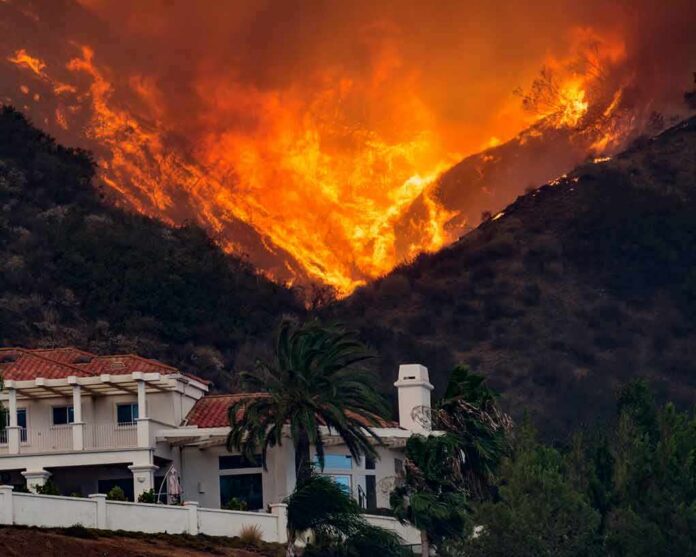
Southern California is bracing for its first major Santa Ana wind event of the season, and the National Weather Service says the danger is real enough to put most of Los Angeles and Ventura Counties under a Red Flag Warning.
Quick Take
- A Red Flag Warning covers most of Los Angeles and Ventura Counties from 6 a.m. Thursday through 8 p.m. Saturday.
- Winds could hit 20 to 40 mph sustained, with gusts up to 70 mph in the mountains, peaking Thursday afternoon through Friday afternoon.
- Humidity is expected to drop as low as 8 to 20 percent, drying out brush and raising the risk of fast-moving fires.
- Officials are not predicting a wildfire will happen, but they warn that any spark could grow out of control fast.
What The Warning Actually Says
The National Weather Service (NWS) issued the Red Flag Warning on October 15, 2026, covering most of Los Angeles and Ventura Counties. The warning spells out exact numbers instead of vague danger talk. Forecasters expect northeast to east winds of 20 to 40 mph, with gusts between 50 and 70 mph, strongest Thursday afternoon into Friday afternoon. That combination of wind and dryness is what turns a routine fire into an emergency.
Low humidity is the other half of the equation. The NWS warning points to relative humidity dropping between 10 and 25 percent, while a separate agency summary put the minimum even lower, between 8 and 20 percent. Dry air pulls moisture out of grass, brush, and trees, turning them into fast fuel. Combined with strong wind, that dryness is exactly why fire officials consider this stretch of days especially dangerous.
Why Officials Are Sounding The Alarm Now
The NWS warning doesn’t claim a fire is coming. It says if one starts, it could spread fast and threaten lives and property. That distinction matters. A Red Flag Warning is a forecast of conditions, not a prediction of an actual blaze. Still, the agency isn’t mincing words about what residents should do if flames do appear nearby.
The warning tells people near wildland areas to be ready to evacuate if a fire breaks out, and it urges everyone to use extreme caution with anything that could throw a spark, from power tools to cigarettes to parked cars on dry grass. That guidance reflects a basic truth about Southern California: most dangerous wildfires start with a human-caused spark, not lightning. The weather just decides how fast that spark becomes a catastrophe.
Local News Coverage Confirms The Scope
Local outlets have echoed the same numbers the NWS put out. CBS Los Angeles reported the warning spans large portions of both counties, with mountain gusts potentially reaching 70 mph, matching the federal forecast almost word for word. FOX 11 carried similar wind and humidity figures in its own coverage of the advisory. When independent newsrooms confirm the same wind speeds and warning boundaries as the official government product, residents can trust the basic facts even before any fire ignites.
What A Red Flag Warning Does And Doesn’t Promise
It helps to understand what this kind of warning is built to do. Weather researchers who study Red Flag Warnings in other fire-prone regions have found the warnings carry real forecasting value for predicting large-fire outbreaks, but that value shifts depending on local fuel conditions and how fires actually start. In other words, the warning flags the weather setup for disaster. It doesn’t guarantee one, and it doesn’t replace watching the news or local alerts once wind and heat pick up.
That’s also why some neighborhoods inside the warning zone may feel calm winds while others a few miles away get hit hard. Wind behaves differently across valleys, foothills, and canyons, and Santa Ana events are notorious for that kind of patchy intensity. Residents shouldn’t assume their own backyard conditions tell the whole story about risk across the warned counties.
What Residents Should Do Before Thursday
Preparation matters more than panic. Clear dry brush away from homes, charge phones and radios, and have an evacuation plan ready if you live near open hillsides or canyons. Avoid outdoor work that throws sparks, like grinding, welding, or mowing dry grass, during the warning period. Simple precautions now cost far less than scrambling once smoke is already visible on the horizon.
Fire weather warnings have been issued through early Saturday for much of the Sierra Nevada and the mountains around Los Angeles, San Bernardino, San Luis Obispo and Ventura Counties.
A strong Santa Ana wind event will bring warm, dry and blustery winds. High fire danger! pic.twitter.com/eI5T1purpx
— MyRadar Weather (@MyRadarWX) October 15, 2026
Southern California has lived through this cycle before, and the warning system exists because the stakes are high every single season. Santa Ana winds will keep returning each fall, and so will these warnings. Treating each one seriously, rather than brushing it off as routine, is the simplest way families in Los Angeles and Ventura Counties can protect their homes this week.
Sources:
time.com, forecast.weather.gov, cbsnews.com