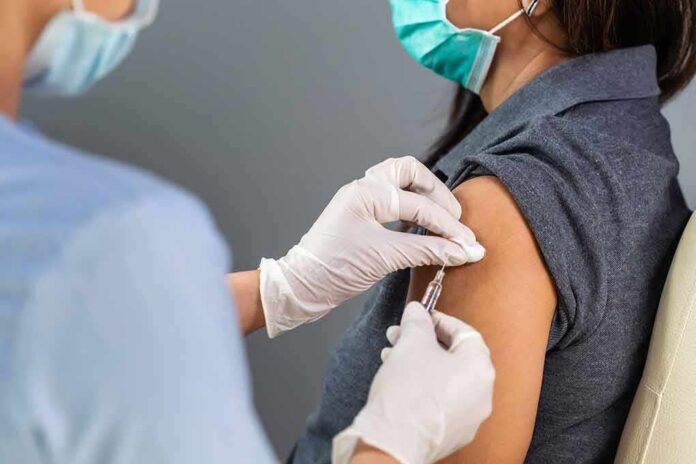
Millions of people who lost weight on drugs like Wegovy and Mounjaro are learning the same hard lesson once the injections stop: the hunger comes back first, and the pounds follow close behind.
Story Snapshot
- BBC News explains what typically happens after people stop taking GLP-1 weight-loss injections, often called “skinny jabs.”
- Appetite and food cravings can return within days, with weight regain often following over the next one to three years.
- Research published in the British Medical Journal found people regain weight up to four times faster than those who lose weight through diet alone.
- Doctors say the drugs work best as part of a long-term plan, not a quick fix, since benefits fade without lasting behavior change.
Why The Hunger Comes Back So Fast
Patients describe the return of appetite as sudden and overwhelming. One woman told BBC News that every time she stops her injections, “the food noise comes back. Loudly.” Doctor Hussain Al-Zubaidi compared it to being hit by “an avalanche or a tsunami.” He said the surge in hunger can start as soon as the next day after the last dose, catching many patients off guard.
The science backs up what patients feel. GLP-1 drugs work by mimicking a gut hormone that tells the brain the stomach is full. Once the medicine leaves the body, that signal fades fast, and old hunger patterns snap back into place. Doctors say this is not weak willpower. It is basic biology reasserting itself once the drug’s chemical support disappears.
The Weight Regain Timeline Doctors Are Watching
Doctor Al-Zubaidi told BBC News the evidence so far shows weight typically returns somewhere between one and three years after stopping treatment. A study in the British Medical Journal found people who quit the injections regained weight four times faster than those who had lost weight through diet and exercise alone. That gap matters because it shows the body fights harder to restore weight lost through medication.
England’s Chief Medical Officer has been blunt about managing expectations. He called the drugs “a breakthrough in obesity management” but warned that stopping them brings “a reversal of the effects” unless patients also make lasting behavioral changes. That warning lines up with wider medical research. A systematic review found people regained roughly two-thirds of their lost weight within a year of quitting semaglutide, the active ingredient in Wegovy.
Side Effects Add Another Layer To The Decision
Weight regain is not the only concern patients weigh. Common side effects while on the drugs include nausea, vomiting, diarrhea, and constipation, while rarer but more serious risks include gallstone disease, pancreatitis, and severe allergic reactions. Some users have also reported hair loss, which is listed as a common side effect on official patient information leaflets. These risks factor into whether a patient decides to stay on the medication long-term or attempt to stop.
Real-World Data Shows A More Mixed Picture
Not every patient follows the same path once they stop. A Cleveland Clinic analysis of nearly 8,000 patients found that, on average, quitting semaglutide or tirzepatide did not lead to major weight regain in everyday clinical practice, partly because many patients later restarted treatment or switched to a different obesity drug. Other real-world data reported by Reuters found a similar pattern, with many patients keeping weight off longer than clinical trial settings suggested.
Still, the broader body of research leans toward regain being the norm rather than the exception. A large meta-analysis found patients regained an average of nearly 5.6 kilograms after stopping GLP-1 drugs, along with a rise in blood sugar markers. Randomized trials focused specifically on withdrawal, including major semaglutide and tirzepatide studies, consistently show rapid regain within the first year off treatment.
What This Means For Patients Weighing Their Options
The takeaway for anyone considering these injections is simple. These drugs can deliver real results, but they were built for long-term use, not a short course. Britain’s medicines regulator has also cracked down on counterfeit and illegally sold versions of these jabs, a reminder that sourcing matters as much as the decision to start or stop. Patients weighing this choice deserve honest information about the tradeoffs, not hype from marketers selling a shortcut.
Common sense says lasting health change rarely comes from a needle alone. Diet, exercise, and sleep habits still matter, whether or not someone takes a GLP-1 drug. The BBC’s reporting makes clear that these medications work best as one tool in a bigger plan, not a substitute for the discipline that keeps weight off for good.
Sources:
bbc.co.uk, linkedin.com, bbc.com, newsroom.clevelandclinic.org, pmc.ncbi.nlm.nih.gov, health.harvard.edu, onlinelibrary.wiley.com