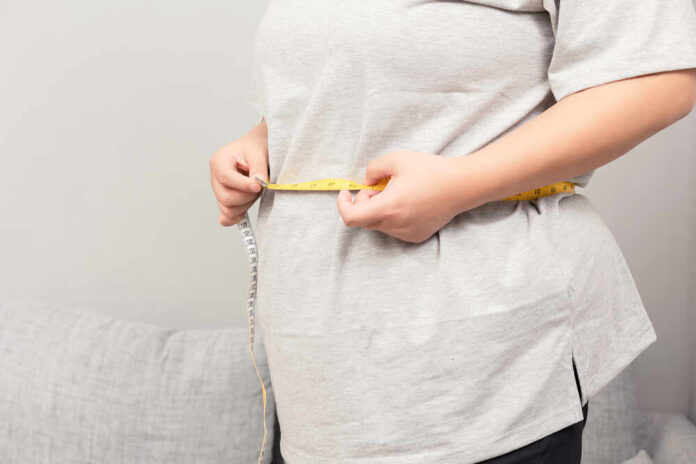
The most jarring truth in midlife weight loss is how far the bathroom scale can drift from what the mirror, your waistband, and your blood tests are trying to tell you.
Key Points
- You can lose a large amount of weight and still look “belly heavy” because fat depots, loose skin, muscle loss, and bloating change at different speeds.
- Neil Milligan’s 13‑month, 4.5‑stone loss with modest daily steps shows how food, fasting, and hormones can drive weight change while body composition quietly shifts in the background.[1][2]
- Abdominal fat is hormonally and genetically “special”: stress, sleep, age, sex hormones, and insulin all shape how stubborn your belly is, beyond calories alone.[7][11][12][14]
- To know whether you are truly healthier, you must track more than weight: waist, strength, labs, and (when possible) body‑composition data.
Why Your Belly Is Left Behind
Most people approach weight loss as a single number problem: get the reading on the scale down and everything else will follow. The repeated real‑world experience, especially after 40, is the opposite. You can drop several stone, see your clothes size fall, watch your blood pressure and blood sugar improve – and still see a stubborn belly in the mirror. That is not vanity; it is physiology, measurement, and expectations colliding.
Neil Milligan’s story is a clean illustration of this disconnect. Over 13 months he lost 4.5 stone (about 63 pounds) while averaging 4,295 steps a day, never using a gym, and shrinking his waist from 48 to 39.5 inches.[1][2] Yet he titled one video “I Lost 4.5 Stone. The Belly Stayed. Here’s What the Scale Was Hiding,” because his midsection remained disproportionately prominent compared with the headline weight loss.[2] At the same time, his GP‑monitored markers – cholesterol, uric acid, HbA1c, kidney function, and liver enzymes – moved in a healthier direction.[1] The scale, on its own, couldn’t explain why his belly lagged behind or what was happening to his muscle.
That gap between weight and shape is not a glitch in his story. It is normal human biology. Visceral fat (deep fat around the organs), subcutaneous fat under the skin, loose skin after weight loss, fluid shifts, and posture all change at different speeds. None of them are directly visible on a bathroom scale, which simply adds them all together into one number.
What Neil’s 4.5‑Stone Loss Actually Tells Us
Milligan’s n=1 experiment is not a controlled trial, but it is unusually well documented for a personal account. After years of higher weight and a failed attempt to lose fat by chasing 10,000 steps a day, he changed strategy. He stopped statins in early 2024 under medical oversight; shifted to non‑ultra‑processed food; adopted an 18:6 intermittent fasting pattern (often around 17:7); completed two extended water fasts (17 and 10 days) early in the journey; and added short resistance‑training sessions later for muscle.[1][2]
Across that period, his weight dropped from roughly 18 stone into the 12‑stone range, and his waist shrank by 8.5 inches while his average daily steps stayed at 4,295.[1][2] More striking than the scale movement were his blood markers: ALT, a liver enzyme associated with fatty liver disease, fell from an abnormal 69 U/L in December 2023 to 10 U/L within about 20 months – an 86% reduction and the lowest in 13 years of records.[1] CRP, a marker of systemic inflammation, dropped 84% over three months as he increased plant diversity and fasting.[1]
Those changes support two points that fit mainstream evidence:
First, his fat loss appears to have been driven primarily by diet, fasting, and metabolic environment, not by exercise calories. In his own framing, resting metabolic rate – heavily influenced by lean mass – accounts for the majority of daily energy expenditure, while the portion you can manipulate with extra activity is relatively small.[1]
Second, even with substantial losses in weight and waist size, his belly did not shrink in proportion to the rest of his body. That tells us that his abdominal contour reflects more than just total fat volume: possibly visceral fat, residual subcutaneous fat, loose skin, and age‑related changes in muscle support.
Why Belly Fat Is Biologically “Stubborn”
Independent medical and research sources explain why Milligan’s experience feels so familiar to many people over 40. Abdominal fat is not just “more fat.” It is a depot strongly shaped by hormones, age, genetics, and lifestyle. Women often see more belly fat after menopause as estrogen falls; men tend to accumulate central fat as testosterone and growth hormone decline.[7][11][12][14] Chronic stress raises cortisol, which pushes the body to store fat around the viscera. Short or disrupted sleep shifts appetite hormones like leptin and ghrelin, amplifying cravings and favoring abdominal storage.[11][14]
Visceral fat in particular behaves differently from subcutaneous fat. Some studies suggest it can become more resistant to loss after prolonged dieting, entering a kind of “preservation mode” that protects deep abdominal stores even as overall weight falls.[9] Yet other work shows that visceral fat is also more metabolically active and often responds well to sustained changes in diet and physical activity when those changes are truly consistent.[13]
Crucially, you cannot choose where you lose fat first. Spot reduction – “flatten my belly with sit‑ups” – does not work.[7][12] When energy balance and hormones shift in your favor, the body draws from multiple depots according to its own rules. For many, that means fat leaves the face, chest, and limbs faster than the midsection.
Beyond Steps: Activity Helps, But It Is Not the Whole Story
The other contested point in Milligan’s narrative is step count. He frames his 4,295‑step average, combined with 4.5‑stone loss, as evidence that the common 10,000‑step target is not necessary for meaningful fat loss – which is true as far as it goes.[1][2] Energy deficit can be created primarily through diet, and his case shows that health markers can improve dramatically without hitting popular step thresholds.
Where caution is warranted is in jumping from “10,000 isn’t necessary” to “activity is largely irrelevant.” Large bodies of research support the role of regular physical activity – especially a mix of aerobic exercise and resistance training – in reducing visceral fat, improving insulin sensitivity, preserving muscle during weight loss, and maintaining lost weight.[7][12][13] Brisk walking, cycling, and strength work do not simply “burn calories”; they change how your body handles glucose and fatty acids and help determine whether your resting metabolic rate remains robust or falls with the scale.
Making Sense of Your Own “The Belly Stayed” Story
If you see yourself in this narrative – significant weight lost, belly still there – the way forward is not to abandon your progress or chase a single magic lever. It is to upgrade your measurement and widen your toolkit.
On measurement, track:
Waist circumference, taken consistently at the same anatomical point, once a week. Strength metrics in key movements – squats from a chair, push‑ups against a wall, grip strength – monthly. Resting labs when you and your clinician judge them appropriate: fasting glucose, HbA1c, lipid profile, liver enzymes, inflammatory markers. When accessible and clinically justified, body‑composition testing through DEXA or similar imaging can clarify whether your belly is fat, skin, or something in between.
On the toolkit, lean into what consensus evidence supports and Milligan’s case illustrates rather than choosing sides in an online diet war:
Prioritize food quality over step counts alone: plenty of minimally processed, fiber‑rich plants; adequate protein; limited added sugars and refined starches.[11][12] Time‑restricted eating and intermittent fasting can be useful tools for some, but they are not compulsory; what matters is a pattern you can sustain without undermining sleep or mental health.
Move with intention, not obsession. Aim for at least 150 minutes per week of moderate aerobic activity plus two days of strength training, scaled to your joints and history.[7][12] You do not need a gym; bands, body‑weight movements, and loaded carries at home can preserve and build muscle.
Protect sleep and manage stress as seriously as you count calories. Cortisol rhythms and sleep duration have measurable effects on appetite, insulin, and abdominal fat storage.[11][14] The 3 a.m. wake‑ups and next‑day carbohydrate binges Milligan describes are textbook examples of how disrupted sleep can feed belly gain.[1]
Finally, keep your expectations grounded in biology. After decades of central weight gain, a midlife belly will not disappear on the timetable of a 12‑week program. For many, the most meaningful health wins happen long before the mirror catches up: improved lab numbers, easier breathing, better joint function, and steadier energy. The scale may move first, the blood tests next, and the belly last.
Sources:
[1] YouTube – I Lost 4.5 Stone. The Belly Stayed. Here’s What the Scale Was Hiding.
[2] YouTube – Podcast: Lab-made meat – another avalanche of hype?
[6] Web – Neil Milligan (@way_more_than_weight_loss) – Instagram
[7] Web – Thanks for the Add I’m currently 711 days sober today and 5 stone in …
[8] Web – [PDF] future choices: international comparisons of obesity trends … …
[9] Web – Status of greater sage-grouse in the Bi-State Distinct Population …
[11] Web – Belly Fat Not Going Away After Weight Loss? Why – MNT
[12] Web – Losing weight but not belly fat? Expert dietitian weighs in
[13] Web – Why Is Belly Fat Hard to Lose? Causes & Solutions – Lotus Med …
[14] YouTube – Belly Fat Getting You Down? Here’s Why And How To Reduce It