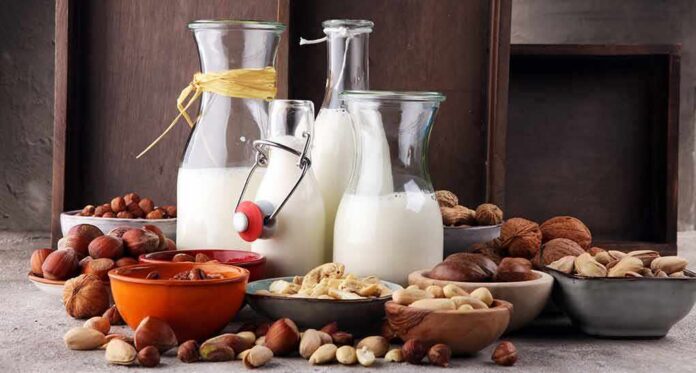
A handful of nuts may quietly nudge your odds toward a longer life—but peanut butter sits in a far murkier gray zone than most headlines admit.
Story Snapshot
- Large, decades-long studies link regular nut eating with 20–30% lower risk of early death and major heart problems.
- Peanuts generally behave like other nuts in these studies; peanut butter does not always show the same clear benefit.
- Most of the data are observational, so they reveal patterns, not ironclad cause-and-effect.
- The smart play is whole or minimally processed nuts, while treating peanut butter as “maybe helpful, details pending.”
What Big Studies Really Say About Nuts and Longevity
Harvard’s twin workhorses of nutrition research—the Nurses’ Health Study and the Health Professionals Follow-Up Study—followed more than 100,000 men and women for about 30 years and found a simple pattern: the more often people ate nuts, the less likely they were to die during the study window.[2] Daily nut eaters had roughly a 20% lower risk of death from any cause versus people who rarely touched them.[2] That protection showed up for cancer, heart disease, and respiratory deaths alike.[2]
Other cohorts and meta-analyses backed this up. Summaries in medical outlets report that higher nut intake is associated with 20–30% lower all-cause mortality and substantial reductions in coronary heart disease risk.[1][4][6] A 2022 scientific review of 18 prospective studies found that about 28 grams per day—roughly a small handful—was linked with roughly 20% lower risk of cardiovascular disease and all-cause mortality.[4] These are not miracle numbers, but for one simple food category, they are impressive.
Where Peanuts Fit In, And Why They Matter
Peanuts are technically legumes, but nutritionally they behave like nuts: they are dense in unsaturated fats, fiber, and phytochemicals.[2][5] Many major analyses simply count peanuts as “nuts,” and the longevity effect still holds.[2][5] A Vanderbilt University and Shanghai collaboration found that people eating the most peanuts had about a 17–21% lower risk of death overall and 23–38% lower cardiovascular mortality, even in low-income and racially diverse groups.[3][1] That suggests the benefit is not just a rich person’s health habit.
The peanut industry’s own summary, naturally enthusiastic but still grounded in peer-reviewed work, lines up with that picture. It cites a 2015 analysis where peanut consumption was associated with roughly 21% lower risk of dying prematurely and a National Institutes of Health analysis linking higher overall nut intake with 22% lower mortality from many major causes, from cardiovascular to respiratory and liver disease.[3] Where peanuts are measured as the main exposure, they generally look like a bargain longevity bet.
The Peanut Butter Problem: Same Peanut, Different Science
Peanut butter looks straightforward—just ground peanuts—yet it keeps causing headaches for researchers. A frequently cited review of nut studies notes a consistent mortality benefit for nuts overall but reports that the same associations did not show up for peanut butter.[5][4] Another recent trial on cellular aging found that daily skin-roasted peanuts slowed telomere shortening, a marker of aging, while peanut butter did not differ from the control group at all.[4] Same plant, different outcome.
That discrepancy has two main explanations. First, many peanut butters on American shelves fold in added sugar, salt, and hydrogenated oils. It is unsurprising that a sweetened, industrially tweaked spread might not deliver the same health payoff as a simple whole food. Second, as several cohort reports admit, peanut butter intake is often lower and harder to measure reliably, which makes it statistically tougher to detect real effects separate from overall diet.[1][4][5]
Association Is Not Destiny: The Healthy-User Trap
All of the marquee nut and peanut studies are observational. Researchers tracked what people chose to eat, then watched who got sick and who died.[1][2][3][4] They adjusted for smoking, body weight, exercise, income, and more, but no statistical model can fully erase the “healthy user” effect. People who snack on nuts instead of chips often differ in many invisible ways—from how much they cook at home to how often they see a doctor—that tilt their odds of living longer.[1][4]
That does not mean the findings are worthless; it means they should be read as “strong evidence that nuts are part of a healthier pattern,” not “eat almonds and ignore everything else.” From a limited-government, personal-responsibility viewpoint, this matters. Public health agencies and advocacy groups routinely leap from association to sweeping food rules. Wise readers look at the size of the effect, ask whether the food displaces worse options, and then decide what fits their own household budget and values.
How To Use This Evidence Without Buying the Hype
Several themes emerge that are hard to argue against. Whole and minimally processed nuts—almonds, walnuts, pecans, pistachios, and peanuts—fit neatly into a template: real foods, rich in healthy fats and fiber, that help nudge cholesterol, blood pressure, and inflammation in the right direction.[2][4][5] The mortality signal is strongest for heart disease, which is exactly what you would expect if these mechanisms are real.[2][4] That coherence carries more weight than any single headline.
Peanut butter, by contrast, is still an open case. Some analyses see no independent longevity benefit,[5] while other summaries that include “nuts (including peanut butter)” hint at potential protection, especially when intake is modest and the rest of the diet is plant-leaning.[3] The most grounded stance right now: choose whole nuts regularly; choose natural peanut butter without added sugar or hydrogenated oils if you enjoy it; and assume that the jar will not rescue an otherwise ultra-processed diet. That approach respects both the data and basic common sense.
Sources:
[1] Web – Nut consumption associated with lower overall mortality
[2] Web – Nut Consumption Associated with Reduced Mortality – AAFP
[3] Web – VU study finds peanut consumption associated with decreased total …
[4] Web – Consumption of Nuts and Seeds and Health Outcomes Including …
[5] Web – Nuts for the Heart – The Nutrition Source – Harvard University
[6] Web – Could Eating Nuts Lower Mortality Risk? – Consultant360