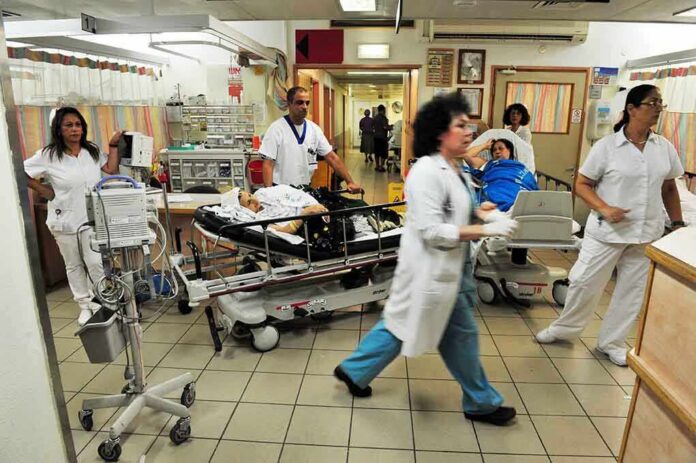
Under Arthur Ashe Stadium sits something most fans never think about: a working hospital, ready the moment a serve goes wrong.
Quick Take
- Mount Sinai runs the official medical operation at the U.S. Open for the 14th straight year.
- Doctors Melissa Leber and James Gladstone lead on-site care for players during the tournament.
- The team includes orthopedic surgeons, emergency doctors, radiologists, and mental health providers.
- Staff plan year-round for heat illness, injuries, and even past outbreaks like COVID-19.
A Hospital Hidden Beneath the Stadium
CBS News New York recently showed viewers what happens behind the scenes at the U.S. Open. Reporter John Elliott spoke with Mount Sinai’s Dr. Melissa Leber and Dr. James Gladstone about how they keep players safe during the two-week event. Their answer was simple. A full medical team stands ready every single day of the tournament, treating everything from twisted ankles to heat exhaustion.
Dr. Alexis Colvin, the tournament’s chief medical officer, put it plainly in an earlier interview. “We essentially bring a hospital to the grounds of the U.S. Open underneath Arthur Ashe,” she said. That is not an exaggeration. The space includes imaging equipment, treatment rooms, and specialists who normally work in New York City hospitals, all relocated to a tennis complex in Queens for two weeks.
Fourteen Years of Building the Same System
Mount Sinai has served as the official hospital and medical provider of the U.S. Open since 2013. That makes 2026 the health system’s fourteenth year in the role. The partnership was recently extended through 2026, covering not just the U.S. Open but also the Billie Jean King Cup and Davis Cup teams. That kind of long-term deal lets doctors build routines instead of starting from scratch each summer.
The team itself is large and specialized. It includes orthopedic surgeons, sports medicine physicians, emergency doctors, and musculoskeletal radiologists. Dr. Leber now serves as Director of Player Medical Services, while Dr. Gladstone brings orthopedic expertise to the group. Having that many specialties on-site means players rarely need to leave the grounds for anything short of a major emergency.
Heat, COVID, and Mental Health Add New Challenges
Tennis courts in late August get brutally hot, and the medical team treats that seriously. Mount Sinai’s staff plans “meticulously” each year for heat and hyperthermia risks among players, fans, and even the crews working the grounds. That planning became public knowledge after the 2024 tournament, when new heat safety measures were rolled out following years of on-court heat complaints.
The pandemic tested the system in a different way. During the 2020 event, Mount Sinai physicians, including infection prevention director Dr. Bernard Camins, built a full COVID-19 safety plan with testing and temperature checks built into daily operations. That effort showed the medical staff does more than patch up injuries. It manages public health risk for an event that draws hundreds of thousands of fans.
Care Extends Beyond the Physical
Player health today means more than sprained wrists and dehydration. The United States Tennis Association (USTA) launched a Mental Health Initiative in 2021, giving players access to licensed mental health providers throughout the tournament. That addition reflects a broader shift in professional sports, where mental strain is now treated with the same seriousness as a torn muscle.
Neurologist Dr. Brian Hainline, who has long worked tournament medicine, described the daily grind doctors face. Three physicians, a neurologist, an orthopedic surgeon, and an internist, stay on-site from an hour before the first match to an hour after the last. With matches running simultaneously across multiple courts, fast communication between doctors and trainers is what makes rapid response possible.
Why This Model Works
The U.S. Open’s approach reflects a pattern common across major tennis events worldwide. Instead of scrambling for care when something goes wrong, tournaments partner with a single hospital system that commits to on-site staffing every year. That consistency builds trust between doctors and the players who see the same faces season after season. It also gives fans confidence that the athletes they watch are protected by real medical infrastructure, not guesswork.
None of this makes headlines the way a match point does. But for players pushing their bodies through five-set battles in summer heat, knowing a full hospital team sits just off the court matters more than most fans realize. It is quiet, steady work, and it has kept the tournament running safely for over a decade.
Sources:
youtube.com, cbsnews.com, ny1.com, nycnewswire.com, beckersspine.com, espn.com, usopen.org, usta.com