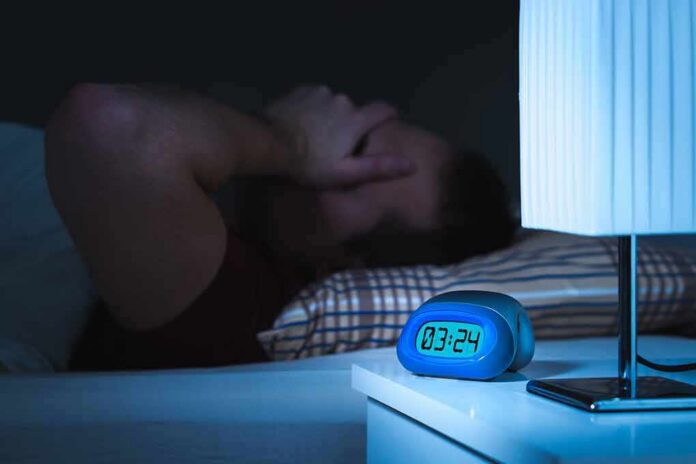
A bad night of tossing and turning might do more than leave you tired. New research suggests it could turn up your pain the very next day.
Quick Take
- A new study tracked people with chronic pain using at-home brain monitors during sleep.
- Deep, stable sleep stages were linked to lower pain levels the following day.
- Past research already shows chronic pain and poor sleep feed off each other.
- Up to 88% of people with non-cancer chronic pain report sleep trouble, studies show.
- Doctors are now exploring sleep-focused treatments as a way to ease pain, not just mask it.
What The New Sleep Study Actually Measured
Researchers ran a preregistered study called NCT06368531, looking at people whose chronic pain limits daily activity. Instead of asking patients to guess how well they slept, the team used ear-based EEG sensors worn at home over multiple nights. This let scientists measure real brain activity during sleep, then compare it directly to each person’s pain levels the next day.
Deep Sleep Stood Out As The Key Factor
The analysis focused on a specific sleep stage called N3, often known as slow-wave or deep sleep. Nights with longer, steadier N3 sleep lined up with lower pain intensity the following day. This wasn’t just about total hours slept. How smooth and uninterrupted that deep sleep stayed mattered just as much, maybe more.
That distinction matters for anyone who assumes eight hours is eight hours, no matter how choppy. A person could technically log a full night’s sleep yet wake up in more pain simply because their deep sleep kept getting interrupted. Sleep quality, not just sleep quantity, appears to carry real weight for pain management.
Why This Fits A Much Bigger Pattern
This single study doesn’t stand alone. Reviews estimate that 72% to 75% of people living with non-cancer chronic pain deal with disturbed sleep, with some estimates climbing as high as 88%. A separate review of 16 long-term studies covering roughly 61,000 people found that worsening sleep was tied to a two- to threefold higher risk of developing a pain condition.
Scientists have also looked at the biology behind this link. Sleep deprivation appears to ramp up inflammation in the body, triggering pathways that make nerves more sensitive to pain signals. That’s a real, measurable process, not just a feeling of being worn down. Poor sleep seems to physically lower the threshold for what the body registers as painful.
The Relationship Runs In Both Directions
Pain and sleep don’t just affect each other once and stop. Research tracking people over time found that changes in sleep complaints at three months predicted changes in pain a full year later. That means poor sleep can set off a pain flare, and that pain flare can then wreck the next night’s sleep, creating a cycle that’s hard to break without addressing both sides.
Treatments Are Starting To Target Sleep Directly
This growing evidence has pushed treatment approaches to change. A meta-analysis of non-drug sleep therapies found they produced a large improvement in sleep quality and a smaller, but real, reduction in pain itself. Cognitive behavioral therapy aimed at both pain and insomnia together outperformed therapy focused on just one or the other in adults with osteoarthritis.
That’s a meaningful shift for anyone who has been told to just manage pain with medication alone. Fixing sleep isn’t a replacement for medical care, but it looks like a legitimate piece of the puzzle. For people whose chronic pain has resisted standard treatment, better sleep habits may offer a path that doesn’t come with the side effects of another prescription.
What This Means For People Living With Chronic Pain
None of this means a good night’s sleep cures chronic pain. But it does suggest that stable, uninterrupted deep sleep deserves the same attention patients give to diet or exercise. Simple steps, like keeping a consistent bedtime and cutting back on screens before bed, align with what pain psychologists already recommend to protect that deep sleep stage.
For the roughly one in five Americans living with chronic pain, this research offers something rare: a lever they can actually pull themselves. Sleep habits aren’t a cure, but they’re a controllable piece of a condition that often feels anything but controllable.
Talk to a doctor before changing any pain treatment plan, since sleep changes work best alongside medical care, not instead of it.
Sources:
pmc.ncbi.nlm.nih.gov, ncbi.nlm.nih.gov, onlinelibrary.wiley.com, mindbodygreen.com