Not all plant-based diets are created equal, and a large body of new research shows the difference can decide whether you grow frail in old age or stay strong.
Quick Take
- A major study found a healthful plant-based diet lowers frailty risk, while an unhealthful one raises it.
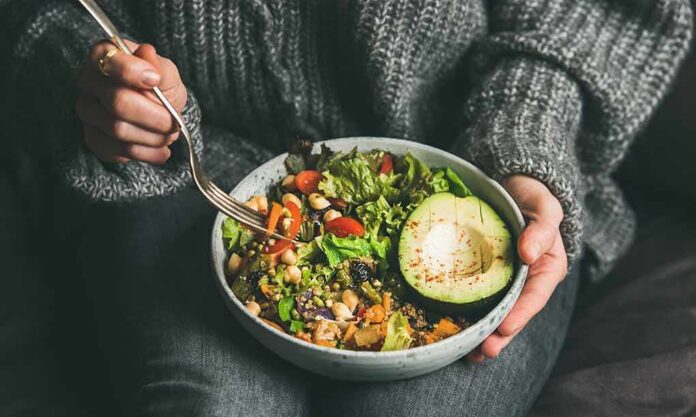
- The healthful pattern means fruits, vegetables, whole grains, nuts, and legumes, not just “no meat.”
- The unhealthful pattern includes juices, refined grains, and sugary drinks, which still count as plant-based.
- Multiple independent studies across different countries found the same pattern, strengthening the case.
What The Core Study Actually Found
The peer-reviewed study “Association between the quality of plant-based diets and risk of frailty” compared people eating the most healthful plant-based diets to those eating the least. The top group had a 23 percent lower risk of frailty, with researchers reporting a hazard ratio of 0.77. The opposite held true for unhealthful plant diets, where risk climbed as quality dropped.
Researchers found a clear dose effect too. Every 10-point increase in healthful diet score corresponded to a 15 percent drop in frailty risk. That’s not a cliff-edge effect from going fully plant-based. It’s a steady climb toward better outcomes the more real, whole plant foods a person eats regularly.
Why The Word “Plant-Based” Can Be Misleading
Here’s the catch most headlines skip. Potato chips, white bread, and soda are technically plant-based. So is a bowl of lentils and spinach. The study split these into two camps: a healthful index built on fruits, vegetables, whole grains, nuts, and legumes, and an unhealthful index loaded with refined grains, juices, and sugar-sweetened drinks. Only one of those camps showed up as protective.
A separate study on community-dwelling older adults backed this up with even sharper numbers. People eating more healthy plant foods had 61 percent lower odds of frailty, while those leaning on unhealthy plant foods had more than double the odds. The gap between the two groups wasn’t small. It was the difference between aging well and aging poorly.
The Pattern Holds Across Continents
Skeptics might wonder if this is a one-off finding. It isn’t. A prospective analysis of United Kingdom Biobank participants found the highest tier of healthful plant-based eating cut frailty risk by 38 percent, while the unhealthful tier raised it by 61 percent. A Chinese cohort study tracking older adults found the same directional split, with healthful diets lowering risk and unhealthful diets raising it. When results repeat across different countries, diets, and research teams, the signal gets harder to dismiss.
What This Research Cannot Tell You
These studies track people over time and measure outcomes. They don’t randomly assign diets the way a drug trial would. That means confounding factors, like exercise habits, smoking, income, or existing health conditions, could be doing some of the work credited to diet alone. The researchers measured frailty risk specifically, not lifespan, cognitive decline, or biological age markers tracked by newer blood-based aging clocks.
That gap matters for anyone trying to translate a headline into a health decision. A hazard ratio is a population-level pattern, not a personal guarantee. Dietary self-reports also carry measurement error, since people don’t always recall or report what they eat with perfect accuracy. None of that erases the pattern. It just means the pattern deserves a clear-eyed read, not a slogan.
The Practical Takeaway For Readers Over 40
Swapping a steak dinner for a soda and white-bread sandwich isn’t the lesson here. The lesson is that plant-based eating only pays off when it means actual plants, not processed substitutes wearing a health halo. Whole grains over refined ones. Fruit over fruit juice. Legumes and nuts over sugary snacks marketed as “plant-powered.” That distinction, backed by consistent data across multiple large studies, is the one worth remembering.
Sources:
mindbodygreen.com, onlinelibrary.wiley.com, pmc.ncbi.nlm.nih.gov, nature.com