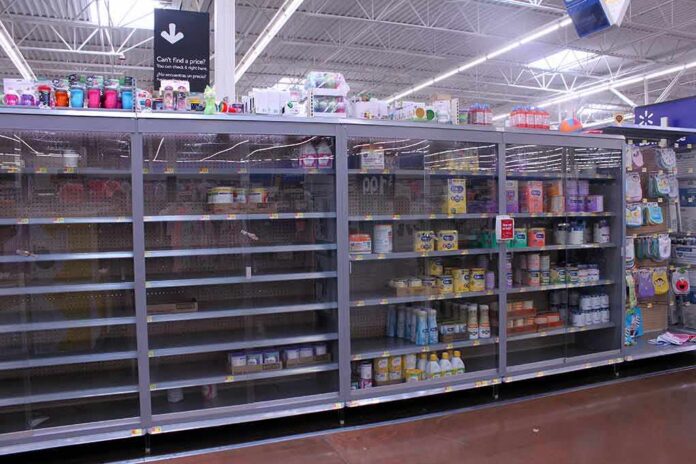
The British government wants every household to have three days of supplies ready before the next storm, outage or cyberattack ever hits.
Quick Take
- The UK’s official “Be Ready” checklist calls for three days of food, water and supplies per household.
- The guidance sets a target of three litres of drinking water per person each day.
- Recommended items include torches, batteries, a power bank, an FM radio, first aid supplies and cash.
- The campaign tells families to add supplies gradually during normal shopping trips, not buy everything at once.
- Similar 72-hour preparedness advice has already spread across Latvia, Sweden, Luxembourg and the wider European Union.
What The Official Checklist Actually Asks Families To Do
The guidance comes from the government’s official Be Ready campaign, not from a news outlet guessing at risk. It tells households to gather three days of bottled water, non-perishable food, hygiene products, lighting, a way to get news updates, basic medical supplies and anything specific to their household, like baby formula or pet food. ITV News laid out the same list for viewers in an October 23 report.
Water gets the most specific number in the entire plan. The checklist tells families to keep three litres per person per day just for drinking, and it openly admits cooking and washing will require more on top of that. Food guidance follows a similar common-sense logic: canned meat, fish, vegetables, dried fruit and nuts that need no fridge and no stove, plus whatever the family already eats regularly.
Beyond Food And Water, The List Covers Daily Life
The checklist does not stop at the pantry. It calls for torches with spare batteries, blankets, warm clothing, a battery or wind-up FM radio, a charged power bank, first-aid basics, prescription medicines, hygiene items, some cash and copies of important documents. That range reflects a basic truth: a power cut doesn’t just threaten dinner, it can knock out phones, heat and the ability to pay for anything.
Families with babies, young kids or pets get specific callouts too. The list includes baby formula, nappies, pet food and bottled water for animals, details ITV News confirmed match the government’s own wording. The campaign frames all of this as gradual preparation. Officials recommend checking what’s already in the cupboard, adding missing items during regular shopping and reviewing the stockpile every six months rather than racing to the store in a panic.
Why Three Days Became The Standard Number
Britain isn’t alone in picking 72 hours as the benchmark. Latvia’s defense ministry put out its first 72-hour crisis brochure back in 2020 and updated it in 2024. Sweden mailed an updated crisis-and-war preparedness booklet to 5.2 million households, and the European Commission has folded similar guidance into its broader Preparedness Union strategy. The logic is practical rather than alarmist: a household stocked for three days needs less immediate help from emergency crews, freeing responders to reach people who truly cannot cope on their own.
Public surveys back up why officials are pushing this now. Government research found only a quarter of people felt confident they could handle a combined power, gas and water outage, and separate research put the number of Britons who feel prepared for a service disruption at just 13 percent. That gap between confidence and reality is likely the real driver behind the renewed push for household readiness.
Some version of this advice will always draw criticism, usually over cost or clarity. Different UK bodies have cited slightly different water figures depending on whether hygiene is included, which could confuse shoppers trying to hit the “right” number. The core message still holds up: a well-stocked cupboard, a charged power bank and a few days of water cost little compared to the chaos of scrambling for supplies after the lights already went out. That’s common sense, not panic.
Sources:
youtube.com, prepare.campaign.gov.uk