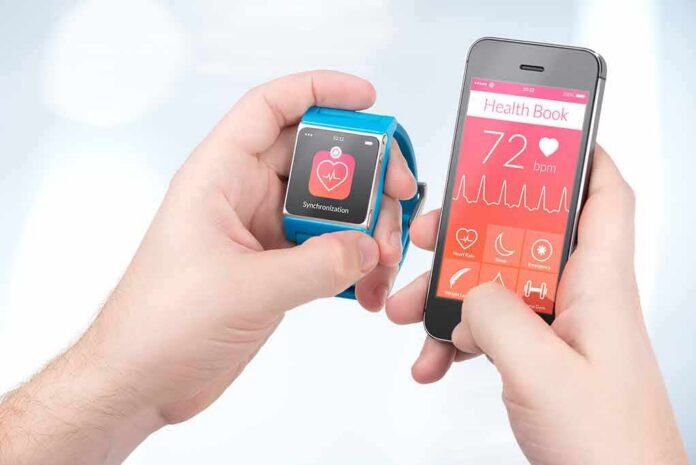
Your smartwatch says you slept great, but your body might disagree. Sleep trackers are built to spot when you’re asleep, not when you briefly wake up, and that gap could be quietly inflating millions of morning sleep scores.
Quick Take
- Validation studies show trackers catch sleep well but often miss brief nighttime awakenings.
- A classic actigraphy review found 95% accuracy spotting sleep but only 36% accuracy spotting wake time.
- Even Garmin’s own study admitted its device misses roughly one in four waking moments.
- Apple, Garmin, and Fitbit market these scores as wellness guides, not medical diagnoses.
The Blind Spot Built Into Every Wrist Sensor
Most sleep trackers work by watching movement and heart rate, then guessing whether you’re asleep or awake. That method works fine for long stretches of stillness. But it struggles the moment your body barely stirs. Researcher Avi Sadeh’s widely cited review found devices correctly flagged sleep 95.2% of the time, yet caught actual wake periods only 36.3% of the time.
That imbalance isn’t a fluke from one study. A 2007 analysis found tracker accuracy drops sharply once a person wakes up more during the night, because the devices’ ability to spot wakefulness often falls below 50%. In plain terms, the more you toss and turn, the less trustworthy your morning score becomes.
Consumer Gadgets Show The Same Gap, Sometimes Worse
Lab-grade actigraphy is one thing. Everyday consumer trackers turned out no better, and in some cases far worse. A 2019 review testing popular sleep-tracking devices found one gadget detected actual wake time only 5.5% of the time. Another study on real products found devices routinely underestimated how much time users spent awake and overestimated total sleep compared with lab sleep monitoring.
One striking detail from a Queensland University of Technology paper: the Neuroon tracker completely ignored short awakenings, while Fitbit simply relabeled them as “restlessness” instead of counting them as wake time. That’s not a rounding error. That’s a design choice that can make a rough night look smooth on your phone screen.
Even The Best Performers Admit The Limits
Garmin deserves credit for publishing its own numbers instead of hiding them. The company’s health study reported 69.7% overall accuracy, with wake-detection specificity at 73.4%. That means even a well-regarded modern device still misses more than a quarter of true awake moments. A newer review of wearable sleep tech backed this up, stating plainly that many devices “cannot reliably detect brief arousals or micro-awakenings” that matter for real sleep quality.
To be fair, not every study paints a grim picture. Some validation research found overall agreement between trackers and lab equipment reaching 79% to 85%. Newer algorithms and sensor combinations are closing the gap. The strongest criticism still comes from older actigraphy research, while newer consumer devices show a more mixed, improving record.
How Companies Frame The Score Matters
Apple’s own support materials describe its sleep score as built from three things: how long you slept, how consistent your bedtime was, and how many interruptions occurred. That’s a reasonable, simple formula. Reviewers echo this framing, calling the Apple Watch score “simple yet informative” for casual users, while conceding it’s “maybe too simple” to capture the full picture.
Garmin fans get a similar message from independent reviewers, who note the sleep score folds in stress, breathing changes, and skin temperature, but still advise focusing on weekly trends rather than trusting any single night’s number. That’s sound advice, and it lines up with common sense: no gadget strapped to your wrist replaces a real sleep lab. Treating these scores as a rough guide, not gospel, keeps expectations honest.
The Real-World Stakes For Everyday Users
The danger isn’t that trackers are worthless. It’s that a clean, high number can create false confidence. Someone with fragmented sleep, waking briefly every hour, might see a score suggesting solid rest when their body never got the deep recovery it needed. That mismatch matters most for people managing insomnia, shift work, or health conditions where every waking minute counts.
None of this means throw the smartwatch in a drawer. These devices are genuinely useful for spotting patterns over weeks and nudging better habits. But common sense applies here just like anywhere else: trust the trend, question the single data point, and remember that a $400 wrist gadget is a wellness coach, not a hospital-grade diagnostic tool.
Sources:
mindbodygreen.com, sciencedirect.com, jphysiolanthropol.biomedcentral.com, sleephealthjournal.org, pmc.ncbi.nlm.nih.gov, eprints.qut.edu.au, academic.oup.com, sleephealthdigest.com