A smartwatch buzzed on a cyclist’s wrist after a fall, and that single alert may have helped save his life.
Story Snapshot
- 9News profiled cyclist Bruce Mildenhall, whose smartwatch fall-detection feature helped get him help after an accident.
- A 24-year-old Australian man’s Apple Watch flagged an abnormally high resting heart rate, leading to a diagnosis of a hole in his heart.
- Hospitals and universities across Australia are testing wearable sensors to catch heart problems, dehydration, and infection earlier.
- Early results are promising case by case, but researchers say large studies are still needed to prove wearables save lives on a wide scale.
A Fall, An Alert, And A Second Chance
Bruce Mildenhall was out riding his bike when he fell. His smartwatch picked up the crash and triggered a fall-detection alert, a feature built to call for help when a wearer can’t do it themselves. 9News reporter Mark Santomartino covered the story, calling it the smartwatch technology saving lives. Mildenhall said the feature effectively helped save his life.
Fall detection works by sensing sudden, hard impacts combined with a lack of movement afterward. The watch then prompts the wearer to confirm they’re okay. If there’s no response, it can automatically contact emergency services. For cyclists, hikers, and older adults who live alone, that automatic call can matter more than any app or data chart ever could.
A Racing Heart Led To A Hidden Birth Defect
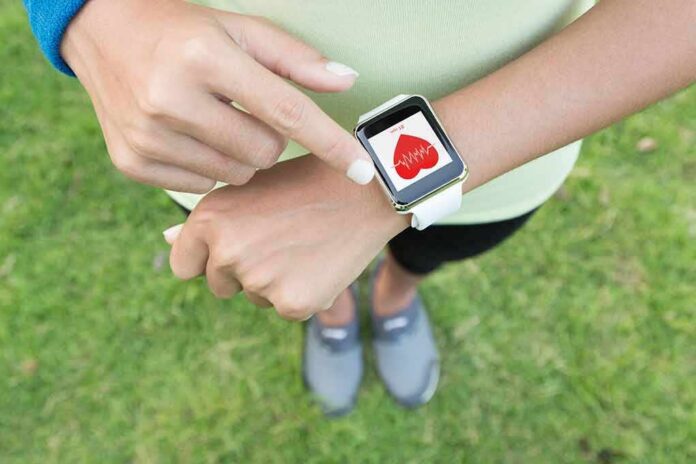
Another Australian case shows wearables catching problems the wearer never knew existed. A 24-year-old man named Adam Love started getting notifications from his Apple Watch showing his heart rate climbing to around 130 to 140 beats per minute while he slept. Concerned, he saw a doctor. Tests revealed a congenital hole in his heart and blood flow that wasn’t routing oxygen correctly through his body.
Love had no obvious symptoms pushing him to a doctor’s office on his own. The watch noticed the abnormal pattern before he did. That’s the real promise of this technology: it doesn’t replace a doctor, but it can nudge a healthy-feeling person to get checked before a hidden condition turns into an emergency.
Hospitals And Universities Are Testing The Next Step
Doctors aren’t just relying on consumer gadgets. At Kilcoy Hospital in Queensland, patients wore sensors tracking temperature, heart rate, oxygen levels, and blood pressure around the clock. Company spokesman Ben Magid said the goal was simple: alert staff the moment a patient starts to decline so they can step in sooner, before a small problem becomes a dangerous one.
Researchers at the Australian National University, working with WearOptimo and Aspen Medical, built microwearable sensors that measure hydration and other body signals in real time. Professor Mark Kendall, the company’s chief executive, said instant hydration readings could let people act before their health is at risk, and that early warning during a heart attack could make all the difference.
At the University of New South Wales, a small study of 11 people over five days helped one woman notice her husband might have atrial fibrillation, an irregular heartbeat that can lead to stroke. Clinical tests confirmed the condition, and he later had urgent quadruple-bypass surgery. It’s a small sample, but it’s exactly the kind of real-world catch researchers hope to replicate at scale.
Promising Signals, Not Yet A Guarantee
University of South Australia researchers are also testing whether an Oura ring, Garmin watch, and EmbracePlus device can spot early signs of infection by tracking sleep, skin temperature, breathing, and heart rate in 100 volunteers around vaccination time. The idea is to train artificial intelligence to flag illness before symptoms even show up, turning a wrist-worn gadget into an early warning system.
These stories share a common thread: individual lives changed by a timely alert. But broader research on wearable monitoring in hospitals has found mixed results, with some reviews showing no significant improvement in outcomes compared to standard care, underscoring that consumer and clinical wearables still need more rigorous testing before anyone calls them a cure-all. For now, the honest takeaway is narrower than the headlines suggest: these devices can prompt someone to seek care sooner, and sometimes that’s enough to matter.
Sources:
youtube.com, appleinsider.com, newshub.medianet.com.au, unsw.edu.au, abc.net.au, au.news.yahoo.com