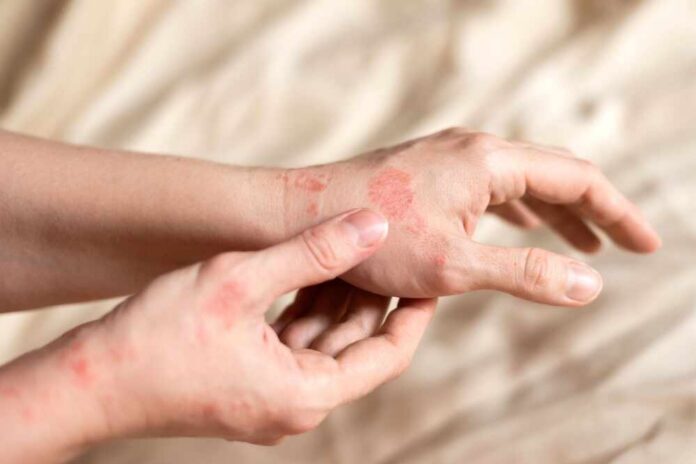
When psoriasis attacks your sleep, it does not just steal rest — it quietly rewires your nights, your mood, and your immune system all at once.
Story Snapshot
- Psoriasis is strongly linked to trouble sleeping, even when people get enough hours of sleep.
- Itch, skin pain, and body inflammation tug directly on the brain circuits that control sleep quality.
- Depression and anxiety often sit in the middle, making it hard to untangle what causes what.
- Better psoriasis treatment can improve sleep, but the research still leaves big unanswered questions.
Psoriasis does more than mark the skin; it quietly sabotages sleep quality
Most people think of psoriasis as a cosmetic problem, but the data tell a harsher story. Psoriasis patients report far more trouble sleeping than people without the disease, even when they spend the same number of hours in bed. In a large United States analysis, having psoriasis almost doubled the odds of “trouble sleeping,” yet total sleep time was unchanged. That means the problem is not just too little sleep. It is broken, restless, low quality sleep that leaves people exhausted by morning.[8]
Smaller clinical studies paint the same picture with more detail. Researchers using the Pittsburgh Sleep Quality Index, a gold standard sleep survey, find psoriasis patients scoring much worse than healthy controls. One study reported that most people with psoriasis met criteria for “poor sleepers,” with scores more than twice as high as controls. When you zoom out across chronic skin disease, about forty percent of patients worldwide report sleep disturbance, with itch named as the main reason. That is not background noise. That is a second disease layered on top of the first.[1][18]
Itch, inflammation, and the brain’s sleep switch are tightly wired together
Doctors have long blamed nocturnal itch for those shattered nights, and the numbers back them up. In psoriatic patients, higher psoriasis severity scores go hand in hand with worse sleep quality and more night-time waking. People with severe psoriasis were several times more likely to report poor sleep than those with mild disease. Itch scores track right alongside sleep scores, and the statistical link is strong. At the same time, blood tests in these patients show elevated inflammatory messengers like tumor necrosis factor alpha and interleukin six, both known to disrupt normal sleep patterns.[4][5]
The connection runs both ways. Sleep scientists now describe a feedback loop between sleep and the immune system. Poor sleep can alter hormone signals and immune memory, which then fuels chronic inflammation. Chronic inflammatory skin diseases like psoriasis sit right in that loop. Reviews of the literature conclude that night-time sleep loss can worsen inflammatory skin activity and that flare-ups can then worsen sleep again, creating a vicious cycle.
Beyond itch and mood: hidden factors that matter to sleep
Modern reviews on psoriasis and sleep urge doctors to look beyond the skin plaques and beyond sadness alone. They point to gut changes linked to poor sleep that may boost systemic inflammation and worsen skin disease activity. They also note very practical sleep killers that patients rarely mention in the exam room, like sticky, greasy topical treatments that make it hard to relax in bed. These factors do not fit neatly in a drug advertisement, but they match everyday experience and deserve attention from any clinician who respects patient reality.[8][9]
The key lesson is straightforward: treat the whole person, not just the lab number. Evidence shows that better psoriasis control, including systemic treatment, can ease insomnia over time, even if some of the early trials are small. Addressing depression and anxiety alongside itch and pain strengthens that benefit, instead of pretending one side of the problem does not exist. At the same time, honest medicine must admit where the science is thin. We still lack strong long-term studies proving that fixing sleep alone will calm psoriasis flares, or that every patient’s sleep trouble comes mainly from their skin. The responsible path is to tell patients the truth: psoriasis and sleep are locked in a complex two-way fight, and ignoring either side is a bad bet for their health.[2][4]
Sources:
[1] Web – This Skin Condition Can Affect An Often-Overlooked Part Of Sleep …
[2] Web – Influence of Itch and Pain on Sleep Quality in Atopic Dermatitis and …
[3] Web – Evaluation of sleep quality and pruritus severity in psoriatic …
[4] Web – The Impact of Psoriasis on Sleep Quality – PMC – NIH
[5] Web – Psleep: Psoriasis and Sleep – PracticalDermatology
[7] Web – Psoriasis Linked to Poor Sleep Quality
[8] Web – Psoriasis and sleep disorders: A systematic review – ScienceDirect
[9] Web – Sleep Disorders and Psoriasis: An Update – PMC
[16] Web – Sleep in psoriasis: A meta-analysis – ScienceDirect.com
[17] Web – Sleep impairment in patients with chronic inflammatory skin diseases
[18] Web – Sleep, Immunological Memory, and Inflammatory Skin Disease