Five plant-based compounds went head-to-head against an aggressive cancer cell line in the lab, and one hit the cells’ power supply harder than the rest.
Quick Take
- Researchers tested curcumin, berberine, biochanin A, cucurbitacin E, and caffeic acid phenethyl ester (CAPE) against fibrosarcoma cancer cells.
- Energy production in cancer cells dropped 83 to 92 percent, compared to 23 to 73 percent in healthy muscle cells.
- Curcumin showed the strongest overall effect, pushing many cancer cells into a non-dividing state called senescence.
- The results come from lab cell cultures, not human patients, and years of further testing remain before any treatment use.
What The Scientists Actually Tested
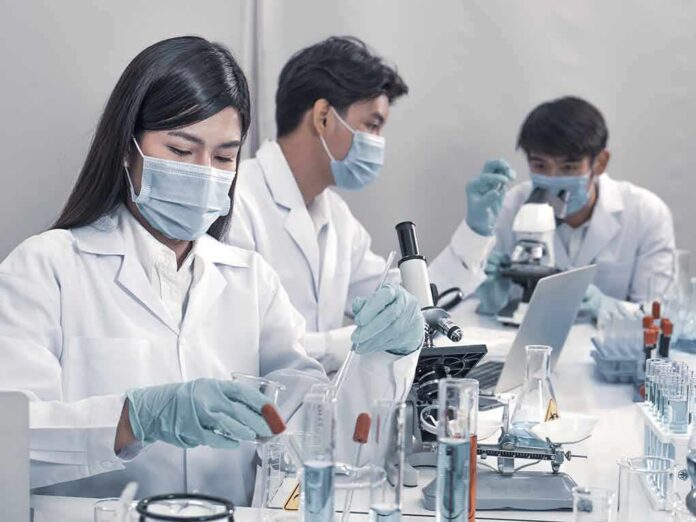
A team published its findings in a peer-reviewed study comparing five natural compounds in two cell models: WEHI-164 fibrosarcoma cancer cells and L6 normal muscle cells. Fibrosarcoma is a rare but aggressive cancer that grows in connective tissue. The goal was simple. See which compound hurt cancer cells the most while leaving healthy cells relatively unharmed.
The five compounds all come from plants or natural sources already familiar to many households. Curcumin comes from turmeric. Berberine comes from several bitter-tasting plants used in traditional remedies. Biochanin A is found in red clover and soy. Cucurbitacin E occurs in bitter melon and squash. CAPE is a component of propolis, the resin bees use to seal their hives.
Why Cell Energy Became The Battlefield
Cancer cells need enormous amounts of energy to keep dividing and spreading. Researchers measured adenosine triphosphate, the molecule cells use as fuel, inside both cell types after exposure to each compound. Levels in the cancer cells fell between 83 and 92 percent. Healthy muscle cells also lost energy output, but far less, somewhere between 23 and 73 percent, depending on the compound.
That gap matters. A compound that starves cancer cells of energy while sparing healthy ones is exactly what cancer researchers look for. The study also tracked mitochondrial health, since mitochondria are the small structures inside cells that generate most of that energy. Damage there showed up consistently across all five compounds tested.
Curcumin Pulled Ahead Of The Pack
Among the five, curcumin produced the strongest combined effect. It disrupted energy production and triggered senescence, a state where cells stop dividing but do not die outright. Berberine also performed well. Senescence matters because a cancer cell that cannot divide cannot spread, even if it survives in a dormant state. Researchers have documented curcumin’s senescence-inducing properties in other cell types, not just fibrosarcoma, lending some consistency to the finding.
The Long Road From Lab Dish To Treatment
This result belongs to an early, exploratory stage of cancer research. It is a mechanistically interesting cell-culture finding, not evidence of a working treatment. The real questions that decide whether something helps patients include tumor exposure in a living body, toxicity at effective doses, how long any benefit lasts, and whether it extends life. None of those questions get answered in a petri dish.
Curcumin’s own history is a caution worth remembering. The National Cancer Institute reviewed early human trials of curcumin products and found the evidence inadequate to recommend them for cancer treatment, noting that blood levels achieved in patients often stay below the concentrations shown to work in lab settings. Poor absorption and rapid breakdown in the body remain major hurdles that researchers are still trying to engineer around with new delivery methods.
None of that erases what this study found. Five natural compounds measurably disrupted cancer cell energy systems, and curcumin stood out as the strongest performer in a controlled comparison. That is a real, useful data point for scientists designing the next round of experiments. It simply is not, yet, a reason for anyone to treat turmeric or tea as a cancer therapy.
Sources:
sciencedaily.com, ecancer.org, mdpi.com, cell.com, journals.physiology.org