When a state that has largely kept measles at bay confirms its first case of the year, the real story is not one sick child or adult, but how a single imported infection tests the resilience of vaccination coverage and public-health systems that many people take for granted.
Key Points
- Connecticut’s recent “first measles case of the year” fits a now-familiar pattern: an unvaccinated traveler returns from abroad, develops classic measles symptoms, and triggers rapid contact tracing and public alerts.
- State officials have repeatedly described these as the first cases since 2021, underscoring how rare measles has been locally but how dependent that success is on sustained vaccination.
- Measles remains one of the most contagious human viruses; roughly 9 out of 10 unvaccinated people exposed will become infected, which is why even a single case prompts aggressive action.[1]
- Nationally, measles has resurged, with more than 1,900 U.S. cases reported in 2026, driven overwhelmingly by clusters of unvaccinated individuals and travel-related importations.[3][5]
- For Connecticut residents, the practical takeaway is straightforward: verify MMR vaccination status—especially before international travel—and know what symptoms and exposure steps to act on if measles is suspected.[1][3]
What “the first measles case of the year” in Connecticut really means
To understand the significance of Connecticut’s first measles case in a given year, you have to start with how unusually quiet the state’s measles landscape has been. When the Department of Public Health (DPH) announced a confirmed measles infection in a Fairfield County child in December 2025, the agency emphasized that this was the first case in more than four years, and the first since 2021. That kind of gap is not accidental; it reflects decades of high immunization coverage and consistent school-entry requirements that kept measles from circulating locally except when imported by travelers.
The “first case this year” framing that appears in 2026 television coverage and social media posts is simply the next iteration of this pattern: long stretches of zero cases punctuated by a single imported infection. Connecticut’s own materials for residents note that in the past year there has been only one confirmed case of measles in the state, even as nearly two thousand cases were being reported nationally.[3] The headline may feel alarming, but from an epidemiologic standpoint the key point is that measles is still arriving from abroad, and that the people who get sick almost always share two features: no vaccination and recent international travel.
The Connecticut case template: unvaccinated traveler, classic measles, rapid response
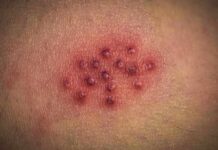
The 2025 Fairfield County case gives a clear template for what “first case” events look like in Connecticut. According to the DPH press release, the patient was an unvaccinated child under the age of ten who had recently traveled internationally. Several days after returning, the child developed the classic sequence of measles symptoms: initial fever, cough, runny nose, and congestion, followed by the characteristic rash beginning at the head and spreading down the body. That clinical picture—respiratory symptoms, high fever that can spike above 104°F, then a descending rash—is textbook measles and aligns with what clinicians are trained to recognize.
Once the diagnosis was confirmed, public-health actions followed a standard but intensive script. State and local health authorities initiated an investigation to reconstruct the child’s travel history, identify exposures both abroad and in Connecticut, and notify anyone who might have been in close contact during the window from about four days before the rash through four days after its appearance. Local health departments, such as Greenwich, issued advisories explaining symptoms, emphasizing that measles is highly contagious, and instructing potentially exposed residents to call—rather than visit—health offices or doctors’ practices so that assessment could occur without exposing others in waiting rooms.[1]
How this fits into the national measles resurgence
Connecticut’s experience is not happening in a vacuum. National surveillance data from the Centers for Disease Control and Prevention (CDC) show more than 2,000 confirmed measles cases in the United States in 2026, up from the low single digits per year in the early 2000s.[5] Roughly 90 percent of these cases have been in individuals who were unvaccinated or whose vaccination status was unknown, and more than 90 percent are classified as outbreak-associated, reflecting clusters rather than isolated sporadic infections.[5]
Many of those outbreaks begin exactly the way Connecticut’s case did: with an infected traveler. The measles virus remains common in parts of the world where routine vaccination coverage is lower or has been disrupted by conflict, under-resourced health systems, or pandemic-era setbacks. When an unvaccinated U.S. traveler visits such a region and is exposed, they may return home incubating the virus but feeling fine; symptoms typically begin seven to fourteen days after exposure. By the time fever and cough develop, they may already have shared enclosed spaces—airplanes, classrooms, waiting rooms—with dozens of people.
Why measles still commands such aggressive public-health attention
People sometimes ask why a single case draws disproportionate attention compared with, say, a handful of COVID or influenza cases in a school. The answer is the combination of measles’ extraordinary contagiousness and its severity profile. Measles is transmitted through respiratory droplets and aerosols that can linger in the air for up to two hours after an infected person has left a room. In a completely susceptible population, one person with measles can infect 12 to 18 others; even in mixed settings, about 9 out of 10 unvaccinated people who share airspace with a measles case will become infected.[1]
While many children recover fully, measles is not a benign childhood illness. Complications include ear infections that can lead to hearing loss, pneumonia (the most common cause of measles-related death in young children), and encephalitis—a brain inflammation that can cause seizures, permanent neurological damage, or death. Globally, measles still kills tens of thousands of children per year, almost all in places where vaccination coverage is inadequate. For older adults and people with compromised immune systems, risks are higher still. From a risk-management perspective, preventing a single chain of transmission is far safer and far less costly than treating dozens of severe cases.
Vaccination coverage in Connecticut: strengths and vulnerabilities
Connecticut has historically maintained robust childhood immunization rates. A Johns Hopkins analysis of state data notes that as of 2026 Connecticut had reported zero measles cases since January 1 of that year and highlights the importance of maintaining “sufficient vaccination coverage” to prevent future outbreaks. School-entry requirements for MMR, combined with outreach by pediatric practices and local health departments, have kept statewide coverage high enough to avoid the kind of sustained transmission seen elsewhere.
But statewide averages can conceal local vulnerabilities. Religious and philosophical exemption policies, while more constrained in Connecticut than in some states, still allow for small clusters of unvaccinated children. Homeschooling populations and certain private school communities can have lower coverage than public schools. When an imported case lands in one of these pockets, the risk of a larger outbreak rises. That is why Connecticut’s public messaging—both in the 2025 Fairfield County case and in general measles materials—emphasizes verifying MMR status, especially before international travel, and ensuring that children receive two doses (at 12–15 months and 4–6 years).[3]
Wastewater, surveillance, and the hunt for silent measles
Another piece of the Connecticut story illustrates how measles surveillance is evolving. In early 2026, measles genetic material was detected in wastewater samples from a Fairfield County sewershed, according to CDC’s National Wastewater Surveillance System. Local health officials explained that such a detection means one or more people shedding wild-type measles virus were present in the community, but that it does not automatically translate into a confirmed clinical case. In fact, they pointed out that similar wastewater signals had appeared previously without yielding a diagnosed infection.
This tension between environmental detection and clinical case reporting matters because it hints at the possibility of missed or subclinical infections. Wastewater sampling can act as an early-warning system, prompting health departments to raise awareness among clinicians and the public when a virus may be circulating. In Connecticut, the Fairfield County wastewater signal came two months after the state had already identified its first post-2021 clinical case in a child attending school in Trumbull, suggesting either ongoing low-level viral presence or additional, undetected cases.
Connecticut has confirmed the first measles case of 2026.
The Connecticut Department of Public Health has confirmed a case in an unvaccinated adult Hartford County resident who recently traveled internationally. The individual developed symptoms after returning and is currently… pic.twitter.com/VRrVZGt2Td
— CT Public Health (@CTDPH) June 15, 2026
What Connecticut adults should do now
For a 40-plus audience, the question is less “What happened in this specific case?” and more “What does this mean for me and my family?” The evidence points to several concrete actions.
First, verify your own and your children’s MMR vaccination status. If you lack records, your clinician may order a blood test for measles antibodies or simply recommend vaccination; two doses are safe for most adults without contraindications and provide about 97 percent protection.[1][3] Second, treat international travel as a trigger to double-check protection, particularly for infants who may need an accelerated schedule and for older adults whose vaccination history is unclear.
Third, know the symptom pattern: fever, cough, runny nose, red eyes, followed by a rash that starts on the face and spreads downward. If you or someone in your household develops these symptoms after travel—or after being notified of exposure—call your clinician or local health department before going in, so they can arrange evaluation without exposing others.[1][3] Finally, remember that high community vaccination coverage is a collective asset. It protects immunocompromised neighbors, infants too young for vaccination, and older adults for whom severe disease can be devastating.
Sources:
[1] YouTube – First measles case in Connecticut this year
[3] Web – First Measles Case Confirmed in CT Resident
[5] Web – Measles detected in Fairfield County wastewater – CT Mirror