Millions of people with postural orthostatic tachycardia syndrome follow the standard advice to the letter, drinking liters of water and shaking extra salt on every meal, yet many still feel their heart pound and their vision blur the moment they stand up.
Story Snapshot
- Postural orthostatic tachycardia syndrome, known as POTS, causes a racing heart and dizziness when a person stands up.
- Standard medical guidance tells patients to drink 2 to 3 liters of water daily and eat 3 to 10 grams of salt.
- Dr. Nathan Keiser argues in a new video that many patients still suffer because their real problem is poor blood distribution, not low fluid volume.
- He points to nerve reflexes that fail to squeeze blood vessels properly when a person stands, cutting blood flow to the brain.
The Standard Advice And Why It Falls Short
Doctors have told POTS patients for years to drink more and salt their food. The Canadian Cardiovascular Society lists blood-volume expansion through fluid and salt as a core first-line treatment. Peer-reviewed reviews back this up, recommending salt and water together because water alone does not expand blood volume for long. The advice is cheap, safe, and easy to follow. But for many patients, it never fully works.
Dr. Nathan Keiser, who treats POTS patients, says in his video that this gap is not a mystery. He confirms the “2021 consensus” dosing is real and useful, but he argues it treats only part of the problem. His claim is not that hydration is pointless. It is that hydration alone cannot fix a nervous system that fails to control blood flow correctly.
A Distribution Problem, Not Just A Volume Problem
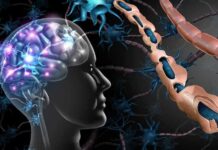
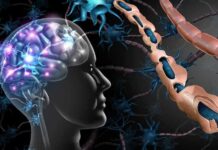
Keiser describes the deeper issue as poor blood distribution rather than a simple shortage of fluid. He says the reflexes that should tighten veins in the legs when a person stands often malfunction in POTS patients. Blood pools in the lower body instead of returning to the heart and brain. That produces the same fainting, racing heart, and brain fog seen in patients who are technically well hydrated on paper.
He points to bedside clues that support this idea, including patients who feel better when they cross their legs or wear compression garments, and a sharp jump in heart rate paired with reduced blood flow to the brain when standing. Independent research backs the brain-blood-flow piece. Multiple studies confirm that cerebral blood flow drops more sharply in POTS patients during standing tests than in healthy people. That reduced flow to the brain lines up with the memory fog and lightheadedness patients report daily.
What This Means For Patients Right Now
Nothing here tells patients to stop drinking water or ditch the salt shaker. Guideline groups still list fluid and salt intake as safe, sensible, first steps for most POTS patients. What Keiser adds is a reason to keep looking when those steps are not enough. If standing still triggers symptoms despite doing everything right on hydration, the next question should be about blood vessel reflexes and nerve function, not just how many liters were logged that day.
For the roughly one to three million Americans living with POTS, most of them women, this reframing offers a next step rather than a final answer. A problem this stubborn probably has more than one moving part. Treating hydration as the whole story, when the science points to a broken feedback loop between nerves and blood vessels, has likely left many patients stuck longer than they needed to be.
Sources:
youtube.com, pwaterapp.com, droracle.ai, standinguptopots.org, pots.support