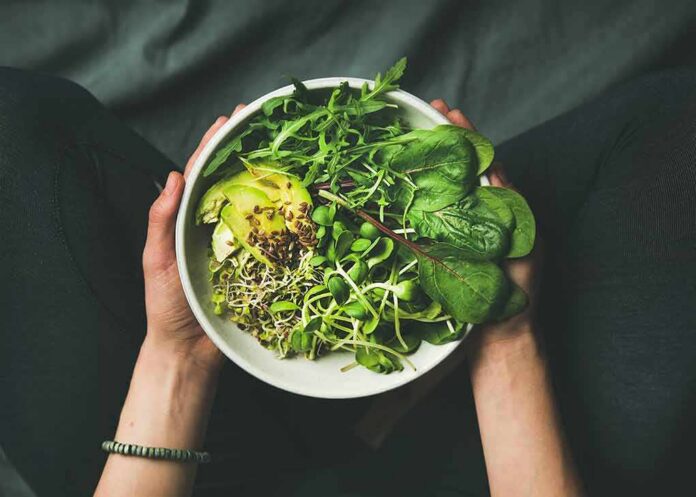
The internet turned “perfect poops” into a status symbol, but the real story behind fibermaxxing is about how fast you change your diet—not how much fiber you can brag about.
Story Snapshot
- Fibermaxxing turns a boring nutrition gap into a viral “hack” to fix gut health, weight, and energy.
- Decades of research say most adults truly do need more fiber for heart, gut, and metabolic health.[4][5]
- The danger is not fiber itself, but influencer-style jumps from low to extreme intake overnight.[3][4][5]
- Prioritize whole foods, go slow, and ignore supplement hype.[3][4][5]
Fibermaxxing: From Dry Nutrition Guideline To Viral Gut Hack
Fibermaxxing sounds like a late-night infomercial gimmick, but it is simply the practice of intentionally eating a very high-fiber diet, often pushing past standard recommendations, to chase better digestion, weight loss, and long-term health.[3][4][5] TikTok creators show off massive salads, chia puddings, and bean-heavy bowls while promising flatter stomachs, steady blood sugar, and “elite” bathroom habits.[1][3] The hook works because it targets a real problem: most adults fall far short of recommended fiber intake.[4]
Researchers and clinicians have spent decades linking fiber to lower cholesterol, better blood sugar control, more regular bowel movements, and lower risk of colon cancer and heart disease.[4] That is why mainstream institutions from ColumbiaDoctors to large hospital systems still tell adults to aim for roughly 25 to 38 grams of fiber daily, mainly from plants.[3][5] Social media did not invent that advice; fibermaxxing simply repackages it with dramatic before-and-after anecdotes and a dash of fear-of-missing-out.
Where The Trend Gets It Right: The Fiber Gap Is Real
Public health data consistently show that only a small minority of Americans hit fiber guidelines, with estimates around five to ten percent.[4] That shortfall matters. Articles summarizing the science describe fiber as a “superstar nutrient” for digestion, satiety, cholesterol reduction, blood sugar stability, and colon cancer prevention.[3][4] Dietitians and physicians quoted across outlets agree that encouraging people to add more plants, whole grains, legumes, nuts, and seeds is a corrective, not a fad.[2][3][5]
Experts also highlight something social media occasionally gets right: the gut microbiome thrives on fermentable fibers from diverse plant foods.[1] When gut bacteria digest fiber, they produce short-chain fatty acids that support the gut lining, inflammation control, and metabolic health.[2] That science-based link between fiber, microbes, and whole-body health explains why fibermaxxing content resonates with people tired of quick fixes and looking for a lever that affects weight, hormones, and even mood.[1][2][4]
Where Fibermaxxing Goes Off The Rails: Speed, Supplements, And One-Size-Fits-All
Dietitians watching the trend draw a bright line between raising fiber toward recommended levels and suddenly doubling or tripling intake from powders and ultra-high-fiber recipes.[3][4][5] Ohio State Health & Discovery and other medical outlets warn that jumping from a low-fiber baseline to lofty targets in days can trigger bloating, cramping, gas, constipation, or diarrhea.[2][3][4] Psychology Today’s review bluntly states that pushing far past recommendations or increasing too quickly can cause “significant gastrointestinal pain or discomfort.”[4]
When someone ignores their body’s signals, slams down multiple fiber supplements to chase a trend, and ends up miserable, that does not indict fiber. That indicts impatience and magical thinking. Multiple sources emphasize that high-fiber approaches are not appropriate for everyone, especially people with irritable bowel syndrome, inflammatory bowel disease, or other gut conditions, who may need more tailored, slower changes.[1][3][5] Treating fibermaxxing as a universal prescription misleads vulnerable people.
The Smarter Play: Slow, Whole-Food Fiber As A Long-Term Investment
Dietitians who like the spirit of the trend but not the excess all land on the same core guidance: eat more plants, build balanced meals, and go slow.[3][4][5] Practical strategies include adding one fiber-rich food at a time, spacing changes over several days or weeks, and pairing higher fiber with more water so it can move through the gut efficiently.[3][4] That approach lets the gut microbiome adapt gradually rather than react with discomfort, and it respects individual tolerance instead of chasing an arbitrary gram number.
Whole-food sources—fruits, vegetables, whole grains, legumes, nuts, seeds, and even fiber-rich foods like avocados—bring vitamins, minerals, and phytonutrients that supplements alone cannot match.[1][2][3][4][5] Several expert commentaries stress that while powders and fortified snacks can be useful tools, they should support, not replace, a base of minimally processed foods.[2][3][5] The question older adults and busy professionals should ask is not, “How do I max my fiber tomorrow?” but “What slow, sustainable upgrades can I live with for the next decade?”[3][4]
Sources:
[1] Web – TikTok “Fibermaxxing” trend targets gut microbiome health
[2] Web – Is fibermaxxing good for you? | Ohio State Health & Discovery
[3] Web – What is ‘fibermaxxing’? 5 health benefits of the new nutrition trend
[4] Web – Fibermaxxing: Health Benefits, Risks, And How To Start
[5] YouTube – Harvard-Trained Doctor Reacts to Fibermaxxing Videos