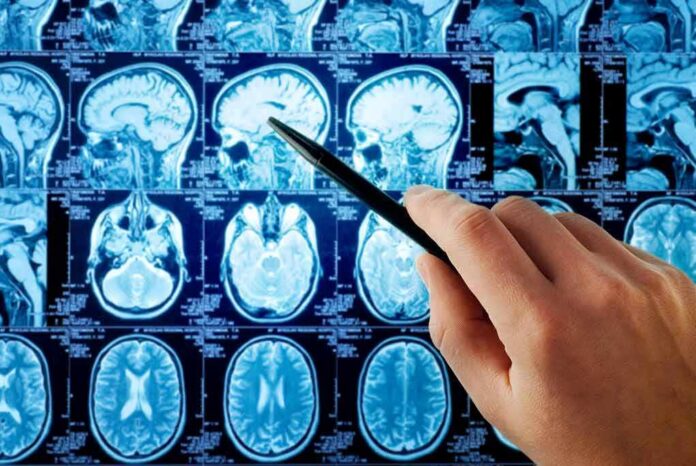
Your mind does not rewrite your DNA, but mental practices that shift stress physiology can change which genes your cells emphasize from hour to hour—a reversible, biologically coherent modulation that shows up in the immune system, inflammation pathways, and energy metabolism.
At a Glance
- Mental practices that elicit the relaxation response can rapidly alter gene-expression patterns tied to inflammation and metabolism.
- Mindfulness interventions have been linked to downregulation of NF-κB–related pro-inflammatory genes and faster physiological recovery from stress.
- These effects are modulation of gene activity, not changes to DNA sequence; they are typically short-term and reversible.
- The strongest evidence centers on stress reduction practices, not “mindset” in the abstract; durable clinical impacts remain an open question.
What science actually supports: modulation, not magic
Across two decades of psychoneuroimmunology and mind–body research, the most consistent finding is straightforward: practices that quiet the stress response—meditation, slow breathing, prayerful contemplation, or structured relaxation training—can shift gene-expression programs in peripheral tissues, especially immune cells. Harvard-affiliated investigators reported that eliciting the “relaxation response” produced immediate transcriptional changes, including suppression of NF-κB–linked inflammatory signaling and alterations in pathways involved in energy metabolism and insulin secretion. A University of Wisconsin–Madison team found that brief, intensive mindfulness practice was associated with reduced expression of pro-inflammatory genes and corresponded with faster recovery from a standardized stressor. A systematic review pooling 18 studies converged on the same molecular signature: downregulation of NF-κB target genes—essentially an anti-inflammatory tilt in the transcriptome.
These observations are biologically plausible. The brain does not toggle genes directly; it modulates endocrine and autonomic outputs—cortisol, catecholamines, parasympathetic tone—that, in turn, alter transcription factors and chromatin states in target cells. Epigenetic mechanisms—chemical marks on DNA and histones that influence gene accessibility—are the gears of that interface. When sympathetic arousal rises, NF-κB and related pathways sensitize immune cells; when arousal falls and vagal tone rises, the balance shifts. The result is a measurable change in which genes are transcribed more or less vigorously for a time.
How the mind signals the genome: mechanism in plain view
To understand why a breathing practice can change gene expression without touching the DNA code, follow the signals. Cognition and emotion engage limbic circuitry, which influences the hypothalamic–pituitary–adrenal (HPA) axis and the sympathetic and parasympathetic branches of the autonomic nervous system. Those systems control hormones and neurotransmitters—cortisol, epinephrine, norepinephrine, acetylcholine—that bind to receptors on immune and metabolic cells. Receptor engagement triggers intracellular cascades that converge on transcription factors such as NF-κB and CREB, opening or closing chromatin around specific genes. The result is transcriptomic rebalancing: fewer pro-inflammatory transcripts, shifts in oxidative stress handling, and changes in glucose-related pathways—precisely the patterns reported in relaxation and mindfulness studies.
Short windows of practice can be enough to register. In some experiments, hours of focused mindfulness produced detectable molecular differences relative to controls and correlated with faster normalization of physiological markers after stress exposure. Other work has shown that perceived stress itself can track with rapid DNA methylation shifts in saliva within roughly 90 minutes—a reminder that subjective appraisal is not mere “mindset theater” but part of the biological input to these systems. None of this implies that thoughts change the sequence of A, C, G, and T; it shows that mental states are upstream of gene-regulatory machinery that evolved to integrate environmental and internal cues.
What the evidence can and cannot claim today
The strongest data support acute and sub-acute modulation of gene expression with stress-reducing practices. The Harvard/Beth Israel team reported a distinct gene-expression “signature” after training, including 172 genes tied to inflammation, circadian biology, and glucose metabolism—changes that accompanied improvements such as lower blood pressure. The Wisconsin group and a broader literature point to downregulation of NF-κB–driven transcripts following mindfulness, aligning with improved stress recovery. A synthesis of molecular findings cataloged reduced pro-inflammatory signaling, lower cortisol or oxidative stress markers, and higher levels of anti-inflammatory mediators across human peripheral tissues after meditation in multiple small studies.
There are limits. Most studies emphasize surrogate endpoints—transcript levels, methylation marks, inflammatory cytokines—rather than long-horizon clinical outcomes. The durations are short: immediate, several hours, or several weeks; persistence months after practice stops is rarely demonstrated in this corpus. And the interventions are concrete behaviors—breathing, attention training, contemplative prayer—not “belief” in isolation. The case for “mindset alone” altering gene expression independent of behavior change is not established by this evidence set. The distinction matters, because autonomic and endocrine shifts likely require the physiological ingredients embedded in these practices.
Placing the claims on a responsible continuum
It helps to separate four statements, ranked from conservative to expansive. First, mental practices that lower sympathetic arousal can acutely modulate gene expression in immune and metabolic pathways: the literature supports this. Second, repeated practice may drive more durable epigenetic and transcriptional patterns: suggestive, but not yet broadly proven across disorders and time scales. Third, a generally “positive mindset” without structured practice can reproduce these molecular effects: currently under-specified and not cleanly isolated from behavior. Fourth, thoughts can permanently “reprogram genes”: not supported; epigenetic shifts are real but reversible, and DNA sequence remains unchanged. Staying on the left end of that spectrum aligns with the best evidence.
Why, then, do popular accounts drift to overreach? The biology is fascinating and empowering; it also lends itself to sweeping narratives. Institutions tend to communicate cautiously, emphasizing measured findings without overselling mechanism or durability. Commercial wellness ecosystems often reverse the emphasis, using the vocabulary of epigenetics to promise global control over gene expression. The science warrants optimism about mind–body leverage; it does not warrant magical thinking.
What longevity-minded readers can do now, and what to watch next
If your aim is to put biology on your side, prioritize interventions with a plausible mechanistic bridge to gene regulation and stress recovery: daily breath-focused meditation, slow diaphragmatic breathing, yoga or tai chi modalities that reliably elicit the relaxation response, and meaningful contemplative practices for those so inclined. The target is consistent modulation of the HPA axis and autonomic balance; dose and regularity likely matter more than any single technique label. Expect improvements in stress reactivity and inflammatory tone first; downstream clinical dividends will depend on baseline health, sleep, movement, and social connection, which all feed the same molecular hubs.
On the research front, three developments would meaningfully raise the ceiling of evidence. First, preregistered longitudinal trials that sample transcriptomes and methylomes at baseline, post-intervention, and months after cessation to test durability against matched controls. Second, factorial designs that tease apart expectancy and belief from the physiological elements of practice—so we learn what cognition adds beyond breath, posture, and timing. Third, cell-type–resolved analyses that identify which immune subpopulations carry the signal, tied to parallel measures of cortisol, catecholamines, vagal tone, and cytokines to strengthen causal links from mind to mechanism. These are feasible studies; some are already gesturing in this direction.
Sources:
brainzmagazine.com, hms.harvard.edu, wbur.org, news.wisc.edu, psychologs.com, sciencedaily.com