Imagine banishing severe depression in just five days through targeted brain pulses that reset faulty neural highways.
Story Snapshot
- SAINT protocol achieves up to 90% remission in treatment-resistant depression via 50 sessions over 5 days.
- fMRI personalizes targeting to prefrontal cortex, reversing dysregulated information flow between brain regions.
- Outperforms standard TMS (80% vs. 13% placebo) by compressing weeks of therapy into days.
- Developed by Stanford’s Nolan Williams with BBRF funding; now available in clinics like Evolve Brain Health.
- Noninvasive outpatient treatment boosts neuroplasticity, challenging slower antidepressants and psychedelics.
SAINT Protocol Revolutionizes Depression Treatment Speed
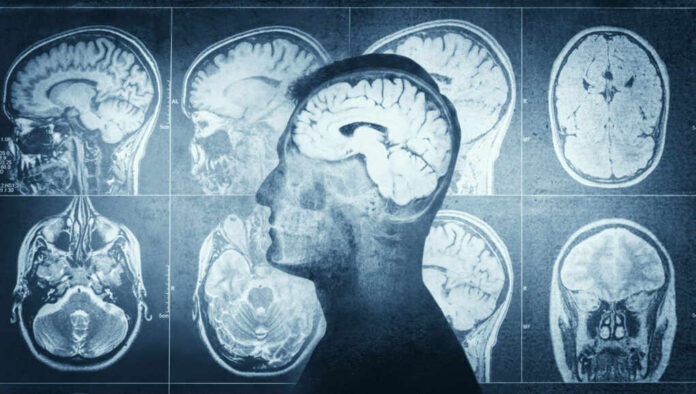
Nolan R. Williams at Stanford University developed the Stanford Accelerated Intelligent Neuromodulation Therapy (SAINT), an intensified repetitive transcranial magnetic stimulation (rTMS). Patients receive 10 sessions daily for five days, totaling 50 sessions. Each session delivers magnetic pulses to the dorsolateral prefrontal cortex (DLPFC), guided by individualized fMRI scans. This targets the subgenual cingulate, a key area in mood regulation disrupted in depression. Trials report 79-90% remission rates in severe, treatment-resistant cases.
From 1980s Origins to 2021 Breakthrough
Transcranial magnetic stimulation began in the 1980s for brain mapping. By the 2000s, rTMS treated depression. FDA cleared standard rTMS in 2008 for treatment-resistant cases, achieving about two-thirds remission over four to six weeks of daily 37-minute sessions. Expansions followed: OCD in 2018, smoking cessation in 2020. Williams’ team published the SAINT acceleration in 2021, using fMRI neuronavigation and 50-minute intervals between sessions to amplify effects through dose-response optimization.
How SAINT Resets Dysregulated Brain Networks
Depression features hyperactivity in the default mode network and aberrant signaling between DLPFC and subgenual cingulate. SAINT reverses this information flow imbalance. Pulses induce synaptic potentiation, elevate BDNF levels, and promote gray matter growth of 3.5-11.2%. Patients feel a tapping sensation on the scalp during outpatient sessions in private rooms. This personalization yields 80% remission versus 13% placebo, far surpassing traditional TMS’s 66% symptom reduction in earlier trials.
Clinic data from Evolve Brain Health confirms real-world results: 84.6% response rate and 76.9% remission. These align closely with controlled trials, though slight variations reflect practical settings versus labs. Long-term durability beyond weeks requires further study, but initial persistence of network changes exceeds three times that of standard protocols.
Stakeholders Drive Innovation and Access
Williams, funded by Brain & Behavior Research Foundation from 2016-2018, leads development at Stanford. Magnus Medical manufactures the fMRI-guided SAINT system. Clinics like Evolve in Connecticut offer commercial access, emphasizing five-day completion. Cleveland Clinic provides TMS education, affirming safety for those failing medications. FDA regulates clearances, with patient advocacy pushing adoption for the 30% of depression sufferers resistant to other therapies.
New brain stimulation approach could treat depression in just 5 days
A weeklong, high-intensity version of TMS may work nearly as well as the standard six-week treatment for depression. In a UCLA study, patients who received five sessions a day for five days experienced…
— The Something Guy 🇿🇦 (@thesomethingguy) February 25, 2026
These players form a pipeline: academic pioneers innovate, nonprofits fund, manufacturers scale, and clinics deliver. This structure accelerates rollout, prioritizing rapid relief to cut suicide risk and therapy dropouts. Economic wins include shorter treatment timelines—five days versus six weeks—enabling quicker workforce returns and reduced healthcare burdens.
Implications Challenge Mental Health Paradigms
Short-term, SAINT offers days-long relief for millions with refractory depression, easing psychotherapy and pharmaceutical waitlists. Long-term, it positions neuromodulation as frontline therapy, potentially spawning home-based variants like tDCS. It outpaces antidepressants and psilocybin in speed while boosting neuroplasticity. Conservative values favor such practical, evidence-based solutions over prolonged drug dependency, aligning with personal responsibility in health recovery.
Sources:
Evolve Brain Health: Accelerated TMS Therapy
BBRF: Rapid-Acting Brain Stimulation Method May Reduce Major Depression
PNAS: Brain stimulation poised to move from last resort to frontline
Cognitive FX: TMS vs. Psilocybin Therapy for Depression
Cleveland Clinic: Transcranial Magnetic Stimulation (TMS)