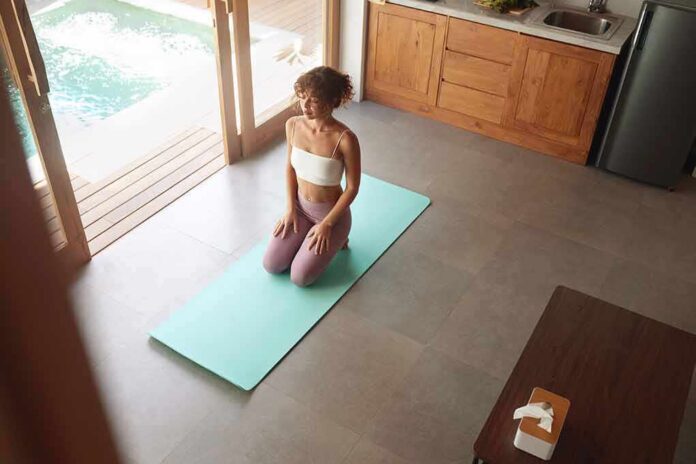
Three simple stretches, done right at your own sink, are giving people real relief from stubborn lower back pain.
Quick Take
- A fitness video from WeShape lays out three specific moves: sink-supported traction, a kneeling hip-flexor stretch, and a chair-supported hip stretch.
- The routine targets spinal space, pelvic position, and hip tightness, three areas tied to common lower back pain.
- Health authorities like the World Health Organization (WHO) and Britain’s National Institute for Health and Care Excellence (NICE) back exercise as a real treatment option for chronic low back pain.
- Research shows exercise helps on average, but no study has tested this exact three-move routine, so results will vary by person.
What The Routine Actually Involves
The video walks through three moves step by step. First, a sink-supported position meant to create space in the spine and ease pressure on the discs. Second, a kneeling hip-flexor stretch that tucks the pelvis and fires up the glutes. Third, a chair-supported stretch for the hip’s outer rotator muscles, held about one minute per side.
Form matters throughout. The instructions call for a flat back, hinging from the hips instead of the spine, and keeping the pelvis lined up correctly. That attention to posture lines up with how physical therapists generally coach these kinds of stretches, where sloppy form can turn a helpful movement into an irritant.
Why Exercise Keeps Showing Up In Official Guidance
This isn’t a fringe idea. NICE tells the public plainly that exercise and movement may ease the symptoms of low back pain and sciatica. The WHO goes further, naming exercise programs as a recommended treatment for chronic primary low back pain, right alongside education and physical therapy. Both groups treat movement as a frontline tool, not an afterthought.
Clinical guidelines don’t push one single routine. NICE recommends choosing exercise based on a person’s needs, preferences, and abilities, with options ranging from general fitness programs to yoga to targeted strength work. That range matters because lower back pain isn’t one condition. Someone with sciatica faces a different picture than someone with simple muscle tightness, and guidance treats those cases differently.
What The Research Says About Results
Bigger studies back up the general idea that movement helps. A WHO-linked review found structured exercise programs produced measurable, moderate improvements in pain and daily function compared to doing nothing. Cochrane researchers reported people doing exercise therapy felt their pain improve by about 15 points on a 100-point scale within three months, compared to those who got no treatment.
None of that research tested the specific three moves in the WeShape video. The claim that one minute at the sink creates more spinal space and takes pressure off the discs comes from the video’s own explanation, not from an imaging study or measured trial. That doesn’t mean it’s wrong. It means viewers are trying a general-category treatment, exercise, without proof tied to this exact sequence.
The Difference Between Easing Pain And Fixing A Disc
Here’s where viewers should pump the brakes a little. The video’s title promises to say goodbye to lower back pain, and its explanation touches on bulging discs and nerve pressure. Temporary relief from a stretch is a real, valuable thing. It is not the same as reversing a structural disc problem, and the video doesn’t offer medical exams or imaging to back that distinction up.
Research on fitness-style YouTube videos for back pain found many failed to give safe, accurate instructions suited for someone managing real injury, and recommended these videos not stand in for professional exercise guidance. That’s a reasonable caution. A general audience video can’t screen for red flags like numbness, weakness, or symptoms that signal something more serious than tight hips.
What This Means For Someone In Pain Today
The bottom line for most people: moving your body, stretching tight hips, and working on posture are backed by real medical guidance as legitimate tools against lower back pain. Trying three simple, low-risk stretches at home carries little downside for most healthy adults. The smart move is treating a video like this as a starting point, not a final diagnosis, especially if pain radiates down a leg or doesn’t ease with rest.
Common sense says this: if a free stretch routine helps you move better and hurts less, that’s a win worth taking. Just don’t mistake a helpful habit for a cure-all, and don’t skip a doctor visit if pain sticks around or gets worse. That balance, trying sensible movement while staying alert to your body’s warning signs, is exactly what the official guidance recommends anyway.
Sources:
youtube.com, nice.org.uk, iris.who.int