Your brain doesn’t “slow down with age” as much as it gets stuck doing life on autopilot—and task-switching training is one of the few interventions with evidence it can loosen that grip.
Story Snapshot
- UT Dallas researchers tied better overall thinking in older adults to training one specific skill: task-switching.
- Brain imaging suggests left frontoparietal activity during switching predicts broader cognitive performance.
- Processing speed appears to power the “crossover” effect into other abilities, not just the practiced task.
- Not all brain games generalize; the training target and measurement matter more than the marketing.
Task-switching is not multitasking, and that difference explains the results
Task-switching means shifting rules fast: answer an email, then calculate a tip, then remember a short list, then return to the email without losing the thread. Multitasking pretends you can do two things at once; task-switching admits you can’t, then trains the transition. UT Dallas work led by Chandramallika Basak and colleagues points to that transition cost as trainable—especially in older adults.
The hook is transfer. Plenty of “brain training” boosts performance on the exact game you practice. The UT Dallas finding people care about is broader: improving switching didn’t just polish one narrow test; it predicted improvements that reached into other cognitive domains. For busy adults over 40, that’s the difference between a parlor trick and something that might actually show up at the grocery store or behind the wheel.
Inside the UT Dallas finding: speed plus the right networks, not vague “brain activation”
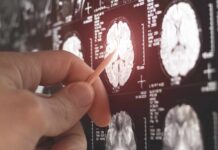
The 2024 work spotlighted older adults and used fMRI to connect performance to brain networks, not just a before-and-after score. The key signal involved the left frontoparietal system, a set of regions associated with executive control, keeping goals online, and selecting the right rule at the right time. When that network engaged in the switching task, overall cognitive performance looked stronger. That specificity matters; it’s a clue about mechanism.
Processing speed sits at the center of the story because switching is essentially speed under pressure with rules attached. When your brain takes longer to update a rule, everything downstream suffers: memory feels worse, attention wanders, and decisions become hesitant. The UT Dallas team’s interpretation, echoed by lead author Paulina Skolasinska, frames speed as the engine behind many brain-behavior links. Train the engine, and other systems stop stalling.
Why age 35 is the quiet turning point nobody schedules for
Adults tend to notice cognitive change when it becomes embarrassing: forgetting names at a reunion, rereading the same paragraph, walking into a room and blanking. Research commonly shows measurable declines in some components of processing speed and executive function starting in midlife, long before “old age.” That creates a practical takeaway: waiting until retirement to “work on your brain” is like waiting for your roof to leak before you learn where the shingles are.
The more provocative angle is cultural. Modern life rewards constant switching—apps, alerts, meetings stacked like pancakes—while quietly punishing the ability to switch well. People get trained to be reactive, not flexible. That’s why task-switching training feels almost conservative in the best sense: it restores disciplined control over attention and decision-making rather than surrendering the day to pings, feeds, and whatever the loudest screen demands next.
Dedifferentiation: when the brain gets less specialized, effort rises and performance slips
One explanation discussed in this research neighborhood is dedifferentiation, the tendency for aging brains to show less specialized patterns of activation. In plain English, the brain recruits extra areas to do what used to be handled efficiently. More activity can signal compensation—or inefficiency. Basak’s work emphasizes that left-sided frontoparietal engagement aligns with stronger performance, while less optimal patterns may correlate with weaker outcomes. The headline lesson: “more activation” isn’t automatically better.
This is where common sense meets measurement. If a training program claims it “lights up your brain,” ask: which network, doing what, and does it predict better performance outside the training task? Brain training earns credibility when it shows transfer, uses objective tasks, and connects changes to known control systems instead of motivational slogans.
What actually counts as training task-switching in real life
Task-switching training doesn’t require expensive gear, but it does require structure. Games and activities that force rule changes—card games, certain strategy games, even structured learning that toggles between skills—can mimic the switching demand. The key is rapid updating: new rule, new response, minimal lag. Health-oriented summaries aimed at older adults often include these activities because they naturally tax flexibility, working memory, and speed under constraints.
Readers should also keep expectations grounded. Research syntheses of brain training show benefits can be domain-specific, and not every “brain game” delivers broad real-world gains. That caution doesn’t contradict the UT Dallas story; it sharpens it. If switching training generalizes more than typical games, that makes it noteworthy, not guaranteed. The responsible conclusion is neither hype nor dismissal: target the skill with the best evidence and measure your own results.
The practical payoff: fewer mental stalls in the moments that matter
The best argument for task-switching training isn’t becoming a trivia champion. It’s reducing everyday friction: following a conversation while cooking, switching from driving to problem-solving after a stressful commute, or returning to a household budget after a phone call without losing accuracy. Speed plus control helps people stay independent longer, which is both a personal good and a public good. Low-cost interventions that preserve function beat expensive rescues after decline.
The open loop for the next few years is scale. Lab findings and imaging links look promising, but the country needs bigger, longer trials that show durable improvements and real-world outcomes. If task-switching truly improves broad cognition via processing speed and targeted networks, then training could become as normal as walking for heart health. Until then, the smartest move is disciplined practice, skepticism toward gimmicks, and consistency over novelty.
Sources:
Brain training games: evidence and limitations
Brain Exercises: What They Are and How to Do Them
Brain-Boosting Activities for Mental Sharpness
21 recommended brain hacks from leading neuroscientists