Eating more fruit, vegetables, and whole grains during the day might sound like diet advice, but new reporting says it could also be the secret to falling into deeper sleep at night.
Quick Take
- The BBC World Service podcast The Food Chain examined how daily eating habits shape nighttime sleep quality.
- Researchers cited in the episode found diets higher in fiber and lower in saturated fat link to more deep sleep.
- Foods like tart cherries, kiwis, and tryptophan-rich items such as turkey and dairy get frequent mentions as sleep helpers.
- Experts also flag caffeine, late-night eating, and added sugar as habits that can wreck a good night’s rest.
What The Food Chain Episode Actually Found
The BBC World Service podcast The Food Chain tackled a question most people have asked at 2 a.m.: does what we eat control how well we sleep? The episode points to a clear pattern. Diets higher in fiber, found in fruits, vegetables, and whole grains, connect to more deep sleep. Diets higher in saturated fat connect to less of it.
One researcher featured in the episode put it bluntly: people who ate more fiber at night got more deep sleep and less light sleep. That is not a minor tweak. Deep sleep is the stage where the body repairs muscle, strengthens immune function, and locks in memory. Trading chips and cookies for fruit and whole grains, according to this research, may shift how much of that repair time you actually get.
Specific Foods Show Up Again And Again
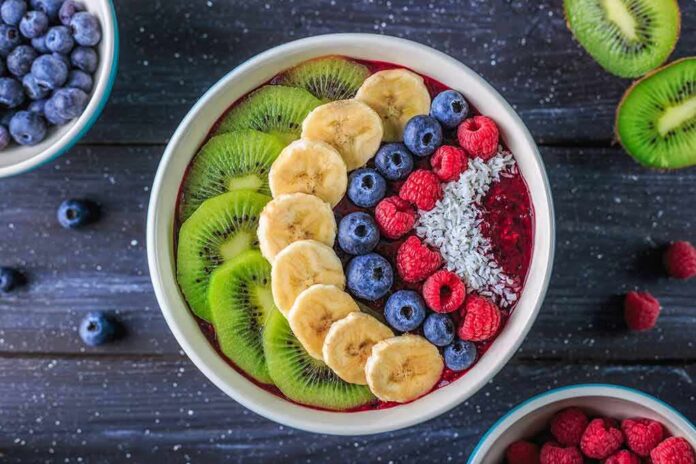
Beyond broad dietary patterns, certain individual foods keep coming up. Tart cherries and tart cherry juice contain natural melatonin and have been linked in smaller studies to longer sleep duration. Kiwifruit shows up too, credited with serotonin and antioxidants that some researchers believe support better rest. These are not massive clinical trials, but the consistency across multiple sources is notable.
Tryptophan gets a lot of attention as well. It is an amino acid the body needs to produce serotonin and melatonin, and it shows up in turkey, milk, yogurt, eggs, oats, and peanuts. BBC’s own food coverage notes that pairing tryptophan-rich foods with carbohydrates may help the body absorb it more effectively, though researchers say more study is needed to confirm exactly how much this matters.
A Mediterranean-Style Pattern Stands Out
One of the more striking findings referenced in BBC reporting involves the Mediterranean diet, built around fruits, vegetables, fish, and whole grains. People who followed this pattern had a 35 percent lower risk of insomnia compared to those who did not. They were also 1.4 times more likely to report a good night’s sleep. That is a meaningful gap for something as simple as a plate of food.
Fish, nuts, and seeds also carry natural melatonin-producing compounds, which may explain part of that Mediterranean advantage. None of this means one salmon dinner cures insomnia overnight. But a consistent pattern of these foods, repeated over weeks and months, appears to build a foundation that supports better rest.
What To Avoid Matters Just As Much
The flip side of this story is just as important. Caffeine interferes with falling asleep and can block deep sleep entirely, and tolerance varies widely from person to person. Experts recommend cutting off coffee well before bedtime if sleep struggles persist. Added sugar and eating too close to bedtime also come up as habits worth reconsidering for anyone chasing better rest.
1/5 Struggling to get a good night's rest? 😴
A recent episode of the BBC World Service podcast "The Food Chain" dives into the surprising connection between what you eat and how well you sleep! Let's break down the key takeaways. 🧵👇
— Merlin Rajesh 🇮🇳 (@merlinrajesh) August 2, 2026
None of this research claims a single food acts like a sleeping pill. The evidence leans on associations and smaller studies rather than massive controlled trials, and researchers are careful to use words like “may help” rather than guarantees. Still, the overall direction is consistent enough that swapping processed snacks for fiber-rich, whole foods looks like simple, low-risk advice worth trying.
Sources:
youtube.com, bbc.co.uk, bbc.com