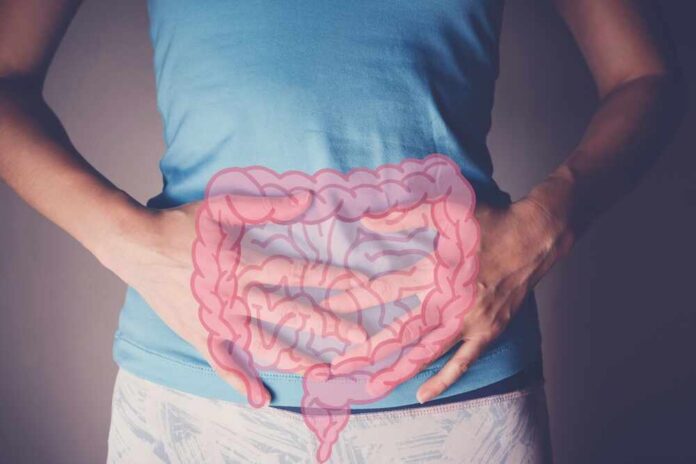
A common gut bacterium now has a clear, mechanical path to colon cancer pinned on one tiny “doorway” protein in your colon wall.
Story Snapshot
- Scientists have identified claudin-4 as the landing pad that a gut toxin uses to attack colon cells.
- The toxin, from certain Bacteroides fragilis strains, cuts a key “Velcro” protein called E-cadherin after docking on claudin-4.
- Mouse studies show a decoy version of claudin-4 can block this attack and prevent tissue damage and tumors.
- Media headlines say the mystery is “finally solved,” but colon cancer risk still involves diet, genetics, and the rest of your microbiome.
The gut toxin, the colon “doorway,” and a long-standing mystery
Researchers have chased one question for decades: how does a normal gut bacterium help spark colon cancer instead of just living quietly in our intestines? Certain strains of Bacteroides fragilis, a common colon resident, make a toxin called Bacteroides fragilis toxin that is strongly linked to colon tumors in animals and human studies. The toxin disrupts the colon lining and fires up inflammation, but nobody knew the exact lock it used to break in. That missing lock is what this new work finally nails down.
A team led by Johns Hopkins and Harvard used a powerful gene-editing screen to strip different proteins off colon cells and then tested whether the toxin could still bind and do damage. When they removed a tight junction protein called claudin-4, the toxin lost its grip and could no longer cut E-cadherin, the protein that helps cells stick together. That experiment turned claudin-4 from a background support player into the main docking station for this cancer-linked toxin.
How claudin-4 docking turns into barrier failure and tumor fuel
Claudin-4 sits in the tight junctions, the “zipper” between colon cells that keeps the contents of your gut from leaking into the body. Once Bacteroides fragilis toxin binds claudin-4, it lines itself up to cleave E-cadherin on the cell surface. E-cadherin acts like Velcro between neighboring cells; when it is cut, the barrier weakens, gaps open, and the immune system sees a war zone instead of a calm wall. That chronic damage and repair loop supports cell growth, DNA damage, and in the wrong context, tumors.
Mechanistic work over the past years shows this toxin does not just poke holes; it flips cancer-linked switches inside the cells. After E-cadherin is damaged, signaling pathways like Wnt and nuclear factor kappa B turn on, driving inflammation and abnormal cell division. The new claudin-4 story plugs the remaining hole in that model: it shows exactly how the toxin gets close enough to E-cadherin to cut it cleanly and reliably, turning a fuzzy association into a precise chain of events from docking to damage.
The decoy protein that stopped cancer in mice
Once scientists knew claudin-4 is the docking station, they asked a simple engineering question: what if we flood the system with fake docking stations? Collaborating groups built soluble decoy proteins that mimic the outer part of claudin-4 so the toxin would bind the decoys floating in the gut instead of the real claudin-4 on colon cells. In mouse models colonized with toxin-producing Bacteroides fragilis, this decoy soaked up the toxin, kept E-cadherin intact, and protected the colon lining from damage, inflammation, and tumor formation.
Scientists have solved how a common gut bacterium toxin contributes to colon cancer. It binds to claudin-4 to breach the gut barrier. https://t.co/vaY8EaOc1q pic.twitter.com/29aIIOFLD2
— Drew Grimaldi (@Grimillionaire) July 16, 2026
For a conservative reader focused on common sense and risk versus reward, this is the right place to tap the brakes. These decoys have only been tested in mice so far, not in people. The full structure, dosing, and long-term safety of such a therapy in humans are still unclear. No human clinical trial has shown that blocking claudin-4 actually lowers colon cancer risk yet, and rushing a drug based only on animal data would be the sort of shortcut that has burned patients before.
Why “finally solved” is both true and misleading
Media outlets love clean answers, so some headlines now claim that scientists have “finally solved” how a common gut bacterium triggers colon cancer. That framing is half right and half sales pitch. The new work does elegantly solve one important piece: how this specific toxin locks onto cells and slices E-cadherin. But colon cancer as a whole is still a team sport. Diet, obesity, family genes, age, and other bacteria like colibactin-producing Escherichia coli and Fusobacterium nucleatum all play roles.
American conservative values favor personal responsibility and real-world evidence. From that lens, the dangerous spin is the idea that you just “catch” colon cancer from one microbe and then fix it with a single high-tech drug. That view tempts people to skip proven steps like colonoscopy screening, fiber-rich diets, and exercise, while placing blind faith in a future injection that blocks claudin-4. The science does not support that shortcut. The toxin is one strong co-driver, not a standalone cause.
Where this discovery really matters for everyday people
This claudin-4 breakthrough still has serious upside if used with clear eyes. First, it could help flag people at higher risk: individuals whose microbiome carries enterotoxigenic Bacteroides fragilis and whose colon cells show high claudin-4 expression may deserve closer surveillance in the future. Second, decoy proteins or other claudin-4 blockers might one day become add-on tools for very high-risk patients, not magic shields for the general public. Any such therapy will need careful trials to watch for unintended harm, since claudin-4 also helps maintain normal barrier function.
The broader lesson is simple and sober. Your gut microbes matter for cancer, but they act through specific tools hitting specific targets over many years. This study gives a clear picture of one such tool, Bacteroides fragilis toxin, docking on claudin-4 and cutting E-cadherin to turn the colon lining into fertile ground for tumors. The smart response is not panic about one bacterium or blind faith in one drug, but steady attention to the basics while science turns this sharp new insight into proven, safe options.
Sources:
sciencedaily.com, pubmed.ncbi.nlm.nih.gov, news-medical.net, linkedin.com, ascopost.com, frontiersin.org, cancerletter.com, pmc.ncbi.nlm.nih.gov, crossmark.crossref.org, oncotarget.com, cen.acs.org