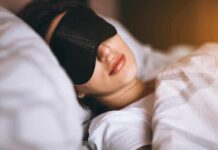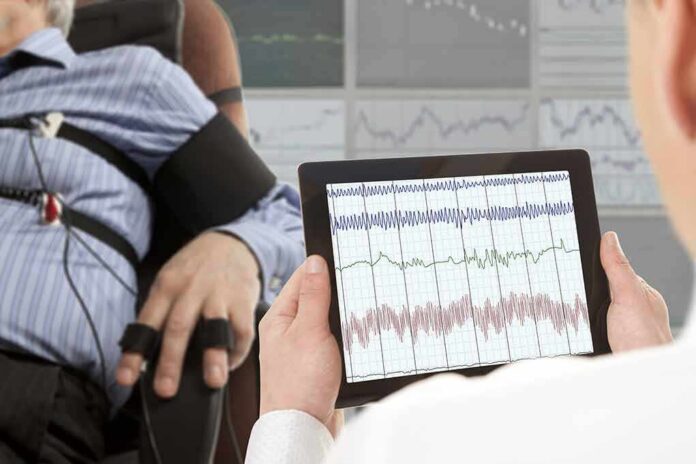
The glow from your bedroom TV or phone screen may be quietly nudging your heart toward trouble long before your doctor spots anything on a stress test.
Story Snapshot
- Large wearable-sensor studies link brighter nights to 30–50% higher risks of heart attack, stroke, and heart failure in adults over 40.[4][7]
- These links persist even after accounting for smoking, blood pressure, income, and sleep duration.[4]
- Women and younger adults in midlife may be hit harder by nighttime light exposure.[4]
- Researchers say the risk looks dose-dependent, making darker nights a practical, low-cost prevention step.[4]
What The New Research Really Says About “Bright Nights” And Your Heart
Researchers in the United Kingdom strapped light sensors onto nearly 89,000 adults over age 40 for one ordinary week, then watched their medical records for almost a decade.[4] People who spent their nights in the brightest environments went on to develop substantially more coronary artery disease, heart attacks, heart failure, atrial fibrillation, and strokes than those who slept in the darkest conditions.[4][7] These are not fringe outcomes; they are the exact events that land families in emergency rooms at 3 a.m.
This was not a quick-and-dirty questionnaire study. The devices objectively recorded how much light hit each participant’s wrist between about 12:30 a.m. and 6:00 a.m., then researchers linked that exposure to hard cardiovascular outcomes over 9.5 years.[1][4] Compared with people whose nights were reasonably dark, those in the brightest 10 percent had roughly 23–32 percent higher risk of coronary artery disease and 45–56 percent higher risk of heart attack, depending on the modeling approach.[7] That kind of increase rivals traditional risk factors many doctors nag about.
How Light At Night May Turn A Quiet Bedroom Into A Cardiovascular Stress Test
Biology gives these numbers teeth. Light at night does not just annoy your spouse; it directly disrupts circadian rhythms, the body’s 24-hour timing system that tells every organ when to repair and when to get to work.[4] When the brain senses light at a time it expects darkness, it suppresses melatonin, alters stress-hormone patterns, and can push blood pressure, inflammation, and blood sugar in the wrong direction.[4][6] Over years, that disruption plausibly hardens arteries and destabilizes electrical signals in the heart.
A separate American Heart Association report on a smaller Boston study adds a vivid mechanistic picture.[3] Adults exposed to more artificial light at night showed higher stress-related activity in brain regions that regulate the cardiovascular system and greater inflammation in their arteries on imaging tests.[3] Researchers described a nearly linear relationship: more light, more stress, more vascular inflammation, and more major heart events, even after adjusting for noise and neighborhood income.[3]
Association Is Not Destiny, But The Pattern Is Hard To Shrug Off
Some caution is warranted. These studies are observational, not randomized experiments, so they cannot prove that your bedroom lamp directly causes a heart attack.[4][7] The sensors captured only one week of light, while people’s habits can change over nine years.[1] Summaries also do not spell out whether the light came from street lamps, alarm clocks, or a streaming binge, which muddies any single villain.[1][4] Good science admits these gaps instead of pretending we already have perfect answers.
Yet the researchers aggressively tackled the obvious confounders. They adjusted for age, sex, smoking, alcohol use, diet, physical activity, sleep duration, socioeconomic status, and even genetic risk scores, and the associations still held.[4] The fact that risk rises in a dose-dependent way—from darker to brighter nights—also makes random flukes less convincing.[4][7] When different teams see the same pattern, in different cohorts, and the biology points in the same direction, you do not ignore it while you wait for a perfect laboratory trial.
Who Seems Most Vulnerable
The large cohort analysis found that women showed stronger links between nighttime light and heart failure and coronary disease, while younger participants showed stronger links with heart failure and atrial fibrillation.[4] That matters for anyone who assumes “I’m only 45, I will worry about my heart later.” For many in midlife, the combination of long workdays, late-night screens, and neighborhood light pollution may be creating a quiet risk that does not show up until the first crisis.
We have filled our nights with cheap artificial light, 24-hour entertainment, and glowing gadgets, then acted surprised when stress, obesity, and cardiovascular disease keep climbing. Personal responsibility suggests you control what you can: dim or shut off bedroom lights, keep screens out of the bed, use blackout curtains if streetlights pour in, and aim for truly dark, quiet nights whenever possible. These are low-cost, low-risk steps that respect the way the human body was designed to work.
Sources:
[1] Web – Nighttime light exposure linked to heart disease – Harvard Health
[3] Web – Exposure to more artificial light at night may raise heart disease …
[4] Web – Light Exposure at Night and Cardiovascular Disease Incidence
[6] Web – Role of Nighttime Light in the Association Between Air Pollution …
[7] Web – Light Exposure at Night and Cardiovascular Disease Incidence