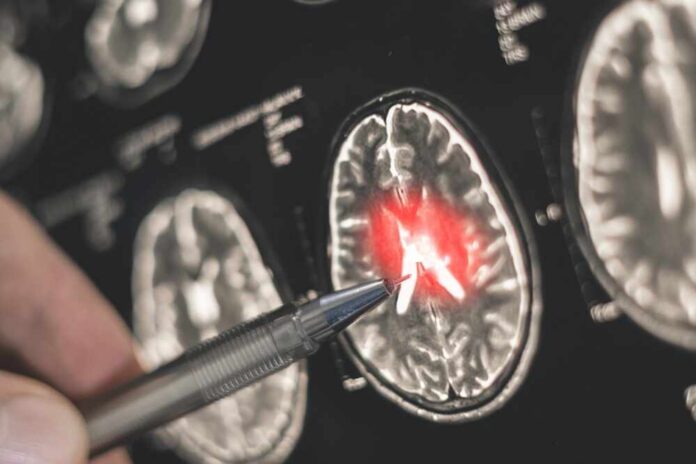
A neuroscientist who studies the brain woke up one day with a tumor in his own head—and what happened next exposes a clash between cold data and the stubborn human hunger for meaning.
Story Snapshot
- A brain tumor diagnosis instantly turns a scientist’s life into an experiment he never signed up for.
- Modern medicine drives survival, but patients keep talking about purpose, faith, and second chances.
- Real recovery extends far beyond the operating room into identity, relationships, and daily habits.
- The most grounded approach treats both the tumor and the soul without pretending one replaces the other.
When The Expert Becomes The Patient
A thirty-year-old neuroscientist understood brain scans, synapses, and statistics. He did not expect to understand fear in the way only patients do. One seizure, one emergency scan, and suddenly he sat where his own research subjects usually sat, staring at a gray mass on an image. Clinical guidelines say the first step after a brain tumor diagnosis is to find a specialist and often get a second opinion, then build a multidisciplinary team for surgery, radiation, or chemotherapy.[1] That textbook pathway became his new job description.
The moment forced a question no laboratory had ever asked him: If your brain is under threat, what exactly are you trying to save? Neurosurgery textbooks cover tumor type, growth rate, and how much can be safely removed.[2] They do not explain why some patients immediately think of their children, some think of unfinished projects, and some think of God. Yet in hospital corridors, that is what people talk about between magnetic resonance imaging scans and lab draws.
The Narrow Lens Of Pure Biology
Doctors measure what they can control. Prognosis charts revolve around tumor location, cell type, and whether surgeons can remove most of the mass.[2] Rehabilitation plans list physical therapy, occupational therapy, and speech therapy to rebuild lost skills. From that vantage point, illness is a technical problem. You cut, zap, and medicate the invader, then train the patient to walk, talk, and think as well as possible. No metaphysics required, just biology and hard work.
A malignant brain tumor does not care about your vision board. Oncologists will quietly tell you that some of their most devout or optimistic patients die early, and some grumpy skeptics live longer than expected. The data refuse to grant automatic healing points for positive thinking. Science demands we admit that faith and grit do not magically rewrite tumor DNA, however comforting that story might sound.
The Wider Story Patients Keep Telling Anyway
Yet patients across the country keep insisting the story is bigger than scans. Brain tumor centers describe care that continues “well beyond initial diagnosis and treatment,” with long-term support, therapies, and follow-up woven into daily life. In those long months, people reevaluate careers, reconcile broken relationships, and re-learn how to drive, read, or play music.[4][6] Focus groups with patients show the emotional journey runs from shock and terror to a surprising sense of gratitude, sometimes even growth.
Survivor stories from major cancer centers and foundations repeat the pattern: a seizure or crushing headache, a terrifying diagnosis, aggressive treatment, and then an unexpected deepening of faith, family bonds, or personal mission. One man at a leading cancer hospital described finding “faith and strength” through his tumor ordeal, crediting both top-tier medicine and his spiritual life for getting him through. These are not New Age influencers selling supplements; they are ordinary patients telling you what the experience did to their priorities.
Healing As A Two-Track Road
Trying to pretend this is either pure biology or pure miracle misses how real life works. Hospitals lay out clear steps: assemble the right team, choose surgery and adjuvant therapies based on the tumor, then commit to a structured recovery plan with guided exercise, nutrition, and cognitive strategies.[1][3][6] Personal stories add the second track: people who set concrete goals, lean on faith communities, and tighten their circles often cope better with the same grueling regimen.
What The Neuroscientist Finally Understood
When a neuroscientist becomes a brain tumor patient, the tidy separation between “objective brain” and “subjective mind” crumbles. He can see on a scan what the tumor does to his cortex, yet he also sees what fear and hope do to his choices. Long-term recovery guides talk about pacing activities, brain rest, and slowly rebuilding endurance in a disciplined way.[6] He now experiences those prescriptions not as theoretical best practices, but as daily tests of character and commitment.
The transformation does not lie in the tumor itself; it lies in what he does while living under its shadow. Serious illness exposes whether our talk about faith, responsibility, and gratitude has any spine. The most honest conclusion holds both truths: medical outcomes still rest mainly on biology and skill, yet suffering often awakens a seriousness about life that comfort never could. That is not sentimentalism. That is sober stewardship of the time and health we are given, however long that turns out to be.
Sources:
[1] Web – What to Do After a Brain Tumor Diagnosis | Next Steps & Support
[2] Web – Brain tumor – Diagnosis and treatment – Mayo Clinic
[3] Web – Brain Tumor Treatment Options | Novant Health
[4] Web – Brain Tumor Treatment | Johns Hopkins Medicine
[6] Web – Life After Brain Tumor Surgery | Recovery Tips from Dr. Ahmed