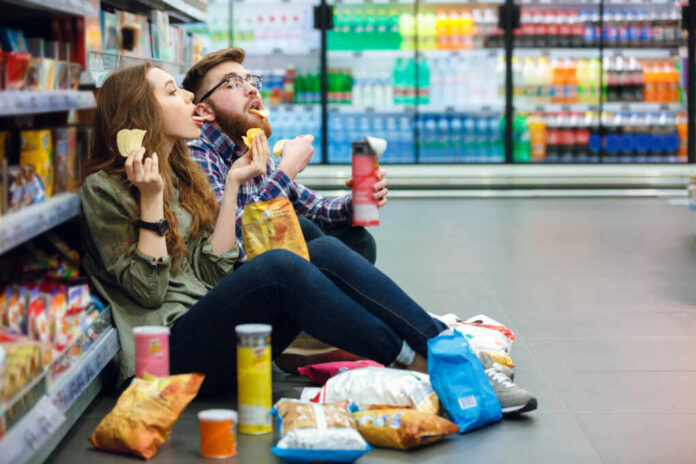
Your childhood junk food feasts wired your brain for lifelong addiction-like cravings that healthy foods can never satisfy.
Story Snapshot
- Childhood exposure desensitizes dopamine receptors, creating tolerance where only junk triggers pleasure.
- Food industry engineers “bliss point” formulas post-WWII to maximize consumption and profits.
- Frequency of junk intake predicts craving strength, per POUNDS Lost trial data.
- Early habits fuel obesity epidemics, costing trillions globally while straining public health.
Childhood Junk Food Conditions Adult Brains
Childhood consumption of high-sugar, high-fat processed foods hyper-stimulates brain reward centers. Dopamine release mimics drug effects, fostering desensitization over time. Receptors downregulate, so vegetables and lean proteins fail to deliver satisfaction. Rats in 1960s experiments preferred sugar over cocaine, revealing innate vulnerability. Human brains, evolved for scarce calories, succumb to modern abundance. This developmental conditioning persists into adulthood, overriding willpower.
Food Industry’s Bliss Point Engineering
Post-WWII, companies optimized sugar-fat-salt ratios to hit the “bliss point,” maximizing palatability. Ultra-processed foods now dominate 60% of U.S. diets, marketed heavily to children. Fast food giants engineer formulations for profit, lobbying against regulations. Academia, including UCLA and Cleveland Clinic, critiques this as deliberate addiction design.
POUNDS Lost Trial Reveals Frequency Link
The 2009-2012 POUNDS Lost trial tracked 811 participants, finding junk food intake frequency strongly predicts cravings. Beta coefficient of 0.032 at six months for Food Craving Inventory items showed statistical significance. Weight gain correlated positively with high-fat and sweet desires at months 6 and 24. Effect size reached 0.060, underscoring habitual exposure’s power. This peer-reviewed data debunks mere “willpower” myths, emphasizing neurological rewiring.
Hormonal and Circadian Triggers Amplify Cravings
Sleep deprivation disrupts ghrelin and leptin balance, spiking hunger for calorie-dense junk via endocannabinoids. UCLA/Northwestern studies link circadian cycles to preferences for processed fare. Stress elevates cortisol, prompting emotional eating. Neuroimaging confirms sleep-deprived brains favor hyper-palatable options. Experts like Lona Sandon note bodies chase euphoria, hard-wired from youth. These factors compound early conditioning, creating vicious cycles.
Long-Term Health and Economic Toll
Dopamine tolerance from youth drives obesity, mental health decline, and overconsumption loops. Affected groups include overweight adults and conditioned children, facing addiction-like brain changes. Global obesity costs exceed $2 trillion annually, burdening healthcare amid social stigma on self-control. Food processors profit immensely, while public health organizations like CDC push reforms. Breaking free demands retraining reward systems, aligning with disciplined, family-centered values.
Sources:
https://www.promises.com/addiction-blog/science-behind-junk-food-addiction/
https://health.clevelandclinic.org/heres-the-deal-with-your-junk-food-cravings
https://www.uclahealth.org/news/article/junk-food-cravings-tied-to-hormones-circadian-cycle
https://grandstrandphysicians.com/blog/entry/decoding-cravings-why-your-body-craves-junk-food
https://pmc.ncbi.nlm.nih.gov/articles/PMC5529244/