Federal health officials and the nation’s top doctors’ group agree that artificial intelligence can genuinely help patients, but they also warn it can give wrong answers, miss serious problems, and treat people unfairly.
Quick Take
- The U.S. Department of Health and Human Services (HHS) says AI can improve care, speed up medical discoveries, and ease clinician burnout, but can also cause unsafe recommendations and biased results.
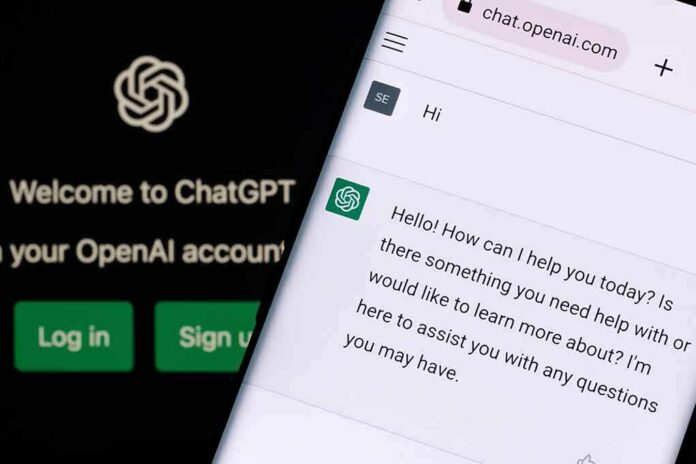
- The American Medical Association (AMA) says patients can use AI to learn about health topics and prepare questions, but warns it cannot diagnose illness or know a patient’s full history.
- The World Health Organization (WHO) lists uses like diagnosis support, treatment planning, and pandemic response as realistic AI applications in health systems.
- Independent reviews of real-world AI tools found most have not been tested in strong, randomized studies that prove they actually improve patient outcomes.
- Experts agree the same risks apply across the board: bias, privacy loss, and unclear accountability when something goes wrong.
Five Ways Health Officials Say AI Can Help
AI can improve clinical outcomes through better decision support, speed up scientific discovery, reduce clinician burnout, and boost patient engagement. Those four benefits form the backbone of the pro-AI case made by federal regulators, not just tech companies selling new tools.
The AMA adds a fifth, simpler benefit aimed directly at patients. People can use AI to learn about health conditions, prepare questions before a doctor visit, and set medication reminders. The WHO separately points to AI’s role in optimizing treatment plans, supporting pandemic preparedness, and helping health systems decide how to use scarce resources.
The Organisation for Economic Co-operation and Development (OECD) rounds out the benefit case with a more technical angle. Its health-sector review says AI can help doctors combine medical knowledge, scan huge amounts of health data for warning signs, and catch patients before they fall through gaps in care. These are the kinds of behind-the-scenes uses patients rarely see but that shape the care they get.
Three Ways AI Use in Health Care Turns Dangerous
The same official sources that praise AI’s potential also list specific dangers. HHS names patient-safety risks, bias, discrimination, “black-box” decisions nobody can explain, and weak data governance as real threats tied to AI tools already in use. The OECD separately flags unequal access, privacy risks, loss of patient trust, and unclear responsibility when an AI-driven decision causes harm.
The AMA’s warning is the most direct for everyday patients. It says AI “may miss important details” and give incorrect advice, and stresses that AI cannot diagnose illness, prescribe treatment, or know a patient’s full medical history. The group urges people to treat AI as a starting point only, not a replacement for a doctor’s judgment.
A Brookings Institution review highlights a third danger: AI systems trained mostly on data from big academic hospitals can perform worse for people who don’t typically get care there. Speech-recognition tools used in some clinical settings have shown weaker accuracy for underrepresented groups, raising fairness concerns that go beyond any single bad diagnosis.
Proof of Real Benefit Still Lags Behind the Promise
Independent research shows a gap between what AI can technically do and what it has been proven to do in daily medical practice. A systematic review of 51 AI tools already used in real clinical settings found only 13 had been tested with randomized controlled trials, the gold standard for proving a treatment works. Just 14 of the 51 even measured patient outcomes directly, and only one looked at cost savings.
That pattern matters because it shows AI’s benefits are often demonstrated in controlled research settings rather than confirmed in ordinary hospitals and clinics treating everyday patients. HHS and WHO both describe strong potential, but neither claims a specific, measured drop in deaths, complications, or costs from the exact AI tools patients encounter today. The technology’s promise and its proven record remain two different things, and regulators have been candid about that distinction.
For patients weighing whether to trust an AI chatbot with a health question, the official guidance lands on a consistent middle ground. Use it to learn, prepare, and organize, but let a licensed physician make the call on diagnosis and treatment. That balance, backed by federal health agencies and the WHO alike, reflects a rare point of agreement in a fast-moving and often overhyped field.
Sources:
youtube.com, gh.bmj.com, ama-assn.org, brookings.edu, i-jmr.org, thelancet.com