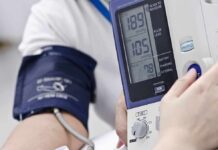
Your heart may be keeping score of your sleep in more ways than you think, and the damage adds up fast.
Quick Take
- A USF-led study of 6,820 U.S. adults found that piling up sleep problems can raise heart disease risk by as much as 141% when confirmed with wearable data.
- The risk climbed with each added sleep issue; one bad habit rarely travels alone.
- Midlife adults sat at the center of the findings, when work stress, family obligations, and early cardiovascular changes collide.
The USF finding that reframed sleep as a stack of risks
The University of South Florida team didn’t hunt for a single villain like “short sleep” or “late bedtime.” They counted how many sleep problems a person carried at once: irregular schedules, poor quality, lousy daytime alertness, bad timing, low efficiency, and too little sleep. In a large national sample averaging age 53, more problems meant sharply higher odds of heart disease history, even after accounting for major confounders.
The headline-grabbing number came from a tougher test than questionnaires alone. A smaller subgroup wore actigraphy devices, the wrist trackers researchers use to estimate sleep-wake patterns in real life. When self-reports and actigraphy lined up, the combined burden of sleep problems correlated with up to a 141% higher heart disease risk. The point for busy adults: the heart doesn’t only care how long you sleep; it cares whether your sleep is stable and restorative.
Why “two sleep issues” is how the trap springs in real life
Readers often latch onto “two issues” because that’s when people recognize themselves: not a chronic insomniac, not diagnosed with apnea, just a normal American who falls asleep on the couch, wakes at 3 a.m., and drifts through the day foggy. That combination matters because sleep problems cluster. Short sleep can cause poor alertness, irregular timing can erode satisfaction, and the body treats chronic inconsistency as stress—exactly the kind that pushes blood pressure, glucose control, and inflammation the wrong way.
Midlife makes that clustering easier. The calendar fills up, caffeine arrives earlier, alcohol creeps later, and screens linger into the bedroom. The cardiovascular system runs on rhythms—daily rises and dips in heart rate and blood pressure—so when sleep becomes unpredictable, the body’s internal timing loses the steady beat that keeps vessels flexible and responsive.
Irregular sleep keeps showing up, even when researchers change the lens
USF’s work fits into a growing stack of evidence from the Multi-Ethnic Study of Atherosclerosis (MESA), which tracked diverse adults using actigraphs rather than memory. Brigham and Women’s researchers reported that irregular sleep patterns nearly doubled cardiovascular events over five years. Vanderbilt-led analysis connected chronic disruption to atherosclerosis markers such as plaque buildup and vessel stiffness. Different teams, different endpoints, same theme: the body reacts badly when sleep timing and duration swing around.
This is the part people underestimate: irregularity isn’t just “less sleep.” Two people can average seven hours, but if one sleeps 11-to-6 like clockwork and the other bounces between five hours on weekdays and nine on weekends, their physiology doesn’t look the same. Regularity helps coordinate hormones, appetite signals, and overnight blood pressure “dipping.” When that dip disappears or becomes unreliable, the cardiovascular system loses a nightly recovery window.
Sleep apnea, insomnia, and the 3 a.m. danger zone
Not every sleep problem is created equal. Obstructive sleep apnea adds an oxygen-and-adrenaline roller coaster that can strain the cardiovascular system nightly. Newer work from Oregon Health & Science University argues that apnea doesn’t just disrupt breathing; it also tangles with circadian biology in a way that may worsen overnight vascular function, helping explain why serious events often cluster in the early morning hours. That’s a mechanistic clue, not a verdict, but it fits what clinicians observe.
Then comes the double-bind: comorbidity. Large-scale analyses have found that people with both insomnia and sleep apnea can show dramatically higher heart disease risk than people with either condition alone. Depression paired with sleep disorders also tracks with heightened risk. The practical takeaway for adults over 40 is straightforward: if snoring, choking awakenings, relentless daytime sleepiness, or persistent insomnia show up, “toughing it out” stops looking like virtue and starts looking like neglect.
What to do with this if you value personal responsibility
Observational studies can’t prove cause and effect, so no honest expert should promise that fixing sleep will guarantee a heart attack never happens. The evidence does support a conservative, practical approach: treat sleep like a health asset you manage, not a hobby you squeeze in. Start with consistency—wake time first—because schedules drive most of the six sleep dimensions measured. If you need a wearable, use it to spot patterns, not to chase perfection.
Second, screen for the big disrupters. Loud snoring, witnessed apneas, morning headaches, and high sleepiness deserve a clinical conversation, not another supplement. Third, tighten the “edges” that create irregularity: late alcohol, long evening naps, and doom-scrolling that steals wind-down time. That’s not moralizing; it’s mechanics. The heart responds to what you repeatedly do, and the USF study suggests the accumulation of problems—not a single bad night—drives the steepest risk.
Sleep research keeps converging on an unglamorous truth: the body prefers order. For readers who grew up hearing “get your rest,” the modern update is sharper: don’t just sleep longer, sleep steadier, and don’t ignore stacked sleep problems that travel together. The scariest part of the USF findings isn’t that sleep can hurt the heart; it’s that many midlife adults can rack up multiple sleep problems without realizing they’ve become high-risk.
Sources:
Poor sleep can triple risk for heart disease
Study finds chronically disrupted sleep may increase risk for heart disease
Irregular sleep patterns may raise risk heart disease
Study: body’s circadian rhythm may increase overnight cardiovascular risk in people with sleep apnea
Having Both Insomnia And Sleep Apnea Could Triple Your Heart Disease Risk, Study Finds
Being a night owl may increase your heart risk
Those With Depression and Sleep Disorder May Have a Heightened Risk of Heart Disease