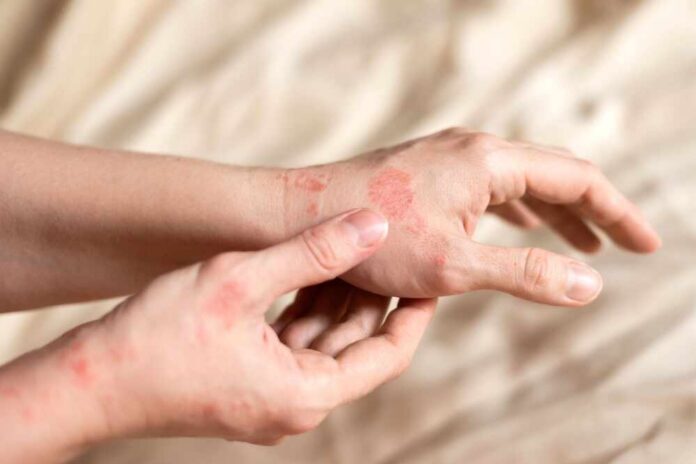
Scientists have finally traced the exact neural highway that turns looming deadlines into angry red skin patches, validating what eczema sufferers have known all along about stress-induced flare-ups.
Story Snapshot
- Fudan University researchers identified Pdyn+ sympathetic neurons as the specific messengers transmitting stress signals from brain to skin, triggering eczema flares
- The study traced how these neurons release CCL11, a chemical that recruits eosinophils to inflame skin during psychological stress
- Mouse experiments showed genetically blocking this pathway completely prevented stress-induced flare-ups, opening doors for targeted treatments
- The research analyzed 51 eczema patients and confirmed stress levels correlated directly with eosinophil counts in their skin
- Findings suggest future therapies could intercept this neural pathway rather than relying solely on broad immunosuppressants
The Neural Pathway That Betrays You Under Pressure
Researchers at Fudan University published their findings in Science after completing a meticulous investigation combining human patient data with sophisticated mouse models. They examined 51 eczema patients retrospectively and discovered a clear correlation between psychological stress levels and elevated eosinophils, the white blood cells central to inflammatory responses. The team then traced the mechanism in mice using genetic ablation and optogenetics, pinpointing Pdyn+ sympathetic neurons as the culprits. When these neurons fire during stressful episodes, they release CCL11, a molecular magnet that pulls eosinophils into skin tissue, where they trigger the redness, swelling, and maddening itch familiar to anyone who has battled deadline-induced flare-ups.
This discovery marks the first time science has identified the precise neuroimmunological mechanism linking your racing mind to your inflamed skin. Previous research documented correlations between stress and dermatological conditions through questionnaires and immune markers, but lacked the neural mapping that explains causality. The Fudan team’s use of optogenetics allowed them to activate or silence specific neurons with light, demonstrating that eliminating Pdyn+ neuron activity completely prevented stress-induced eczema in mice. That level of control transforms this from observational correlation into actionable biological insight, distinguishing it from decades of research that simply confirmed stress makes skin worse without explaining the underlying wiring.
Why Your Skin Revolts When Deadlines Loom
The sympathetic nervous system, traditionally known for its fight-or-flight responses, extends its reach beyond heart rate and blood pressure into your skin’s immune landscape. When you face a looming presentation or project deadline, your brain activates these Pdyn+ neurons, which snake through your body to dermal tissue. There, they secrete CCL11, effectively broadcasting a chemical distress signal. Eosinophils respond to this summons, migrating to the skin and releasing inflammatory mediators that dilate blood vessels and recruit additional immune cells. The result is the familiar cascade of itching, redness, and skin barrier breakdown that transforms manageable eczema into a full-blown flare precisely when you can least afford the distraction.
The researchers noted that this pathway operates independently of the hypothalamic-pituitary-adrenal axis, the hormonal stress response system previously thought to dominate stress-related skin reactions. This distinction matters because it suggests targeting the sympathetic-eosinophil connection could offer relief without disrupting other stress response mechanisms that serve protective functions. The specificity of Pdyn+ neurons as stress-to-skin messengers also explains why different stressors might trigger varying severities of flares, depending on how intensely these particular neural circuits activate. Understanding this granular level of control shifts the conversation from managing symptoms to potentially intercepting the signal before inflammation begins.
From Laboratory Mice to Potential Human Therapies
The therapeutic implications extend beyond validating the wisdom of deep breathing before presentations. Pharmaceutical developers now have a clear molecular target in CCL11 and the receptors eosinophils use to respond to it. Blocking this chemokine or its signaling pathway could prevent stress-induced flares without suppressing the entire immune system, a major advantage over current treatments like corticosteroids or systemic immunosuppressants. The research team explicitly stated their findings reveal potential therapeutic implications, though they cautioned that mouse-specific mechanisms require human validation before clinical trials can proceed. The 51-patient correlation provides encouraging evidence that the pathway operates similarly in humans, but confirming that Pdyn+ neurons function identically in human skin remains the critical next step.
Dermatologists and patients gain immediate practical value even before new drugs emerge. The research provides evidence-based justification for integrating stress management into eczema treatment protocols, elevating techniques like mindfulness and controlled breathing from complementary wellness practices to legitimate medical interventions targeting a specific biological pathway. This scientific validation reduces the stigma eczema sufferers face when stress triggers visible flares, shifting blame from personal weakness to understood neurobiology. The economic impact could prove substantial if targeted therapies reduce reliance on expensive biologics or lengthy immunosuppressant regimens, though development costs and pharmaceutical pricing will ultimately determine accessibility.
The Stress-Skin Connection Beyond Eczema
While the Fudan study focused on atopic dermatitis, the neural pathway they identified likely influences other stress-responsive skin conditions. Psoriasis, rosacea, and stress-induced hives all involve sympathetic nervous system activation and inflammatory cell recruitment, suggesting the Pdyn+ neuron discovery may apply broadly across dermatological diagnoses. The research shifts the entire field’s focus toward the sympathetic nervous system-skin axis, potentially explaining why diverse skin conditions share stress as a common trigger despite different underlying pathologies. This broader relevance amplifies the study’s impact, transforming it from an eczema-specific finding into foundational knowledge about how psychological states translate into physical symptoms across your body’s largest organ.
The unanimous scientific consensus around the pathway’s existence contrasts with the measured caution about extrapolating mouse data to human clinical practice. No contradictions emerged across the multiple outlets reporting the findings, reflecting the study’s publication in Science and its rigorous methodology combining patient analysis with controlled animal experiments. The research provides causality that purely observational human studies cannot, while the patient data demonstrates real-world relevance that animal models alone would lack. This combination of experimental rigor and clinical correlation positions the findings as credible foundations for future therapeutic development, assuming subsequent human trials confirm the mechanism operates as predicted in our more complex biology.
Sources:
Why Stress Can Cause Skin Flare-Ups And Inflammation According To New Study
Stress Pathway Reveals Nervous Contributes
Scientists Uncover The Nerve Pathway That Makes Stress Worsen Eczema
Stress-Skin Neural Pathway Discovery
The Hidden Impact of Stress On Your Skin Managing Flare-Ups From Within
Stress May Be Getting To Your Skin But It’s Not A One-Way Street