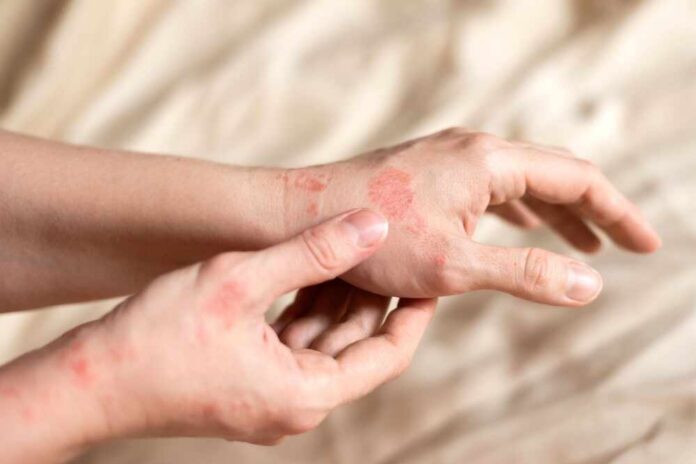
Stress does not invent allergies out of thin air, but it can turn a manageable immune problem into a louder, itchier, and more exhausting one.
Quick Take
- Psychological stress can worsen allergic symptoms and influence immune activity in measurable ways.[2][5]
- Research links stress to stronger inflammatory responses, including allergy, asthma, and hives.[3][5][6]
- Stress may amplify histamine release and make existing reactions feel more intense.[3][4]
- The real story is not whether stress matters, but how quickly it can push a susceptible body toward flare territory.[2]
Stress and the Immune System Are in Constant Conversation
The core idea behind psychiatrist Dr. Bryson Lochte’s framing is supported by review literature: psychological stress affects the immune system, including both effector and regulatory components.[5] That matters because allergies are not just “skin deep” or “sinus deep.” They are immune events, and when the immune system is already primed, stress can raise the volume. Mainstream sources describe this as worsening rather than causing allergy, which is the crucial distinction.[2][3]
That distinction keeps the claim honest and more interesting. Johns Hopkins Medicine explains that allergies begin in the immune system’s response to a substance, and repeated exposure can intensify reactions.[4] Stress then enters as an accelerator, not the original spark. Harvard Health notes that stress can make the allergic response worse, while also emphasizing that the mechanism is not fully nailed down yet. In other words, stress often behaves like a force multiplier.
Why Hives and Itching Often Flare Under Pressure
Hives are one of the clearest places where the stress-allergy connection becomes visible on the skin. Research summaries in the medical literature describe stress as influencing inflammatory and immune pathways that can worsen allergic disease, and newer reporting links stress-related immune dysfunction to worse skin allergies.[1][8] That helps explain why some people notice outbreaks after deadlines, conflict, poor sleep, or prolonged anxiety. The body is not imagining the reaction; it is responding through biology.[5][8]
Mast cells sit near the center of that biology. One research summary reported that stressful situations can activate mast cells, which then release chemical substances tied to inflammatory and allergic disease.[3] That mechanism matters because mast cells are major players in hives, itching, and swelling. The takeaway is practical and a little unsettling: the same person can eat the same food, walk through the same pollen, or encounter the same trigger, yet react more strongly when stress has already pushed immune signaling off balance.[3][5]
What Stress Does to Allergies in Real Life
Stress affects allergies in at least two ways. First, it can intensify the body’s inflammatory response. Second, it can make symptoms feel more unbearable, so a flare becomes harder to ignore and harder to recover from.[2] WebMD notes that stress does not actually cause allergies, but it can worsen reactions by increasing histamine in the bloodstream.[3] That simple explanation is useful because histamine is one of the chemicals most closely associated with sneezing, itching, and swelling.
The most persuasive version of the argument is not dramatic; it is cumulative. A little stress may do little. Chronic stress, on the other hand, can keep cortisol and inflammatory signaling elevated long enough to create a pattern of recurring flares.[1][5][8] That is why some people swear their allergies “suddenly got worse” during a difficult season of life. The allergies may have been there all along. Stress just made the hidden weakness impossible to miss.[2]
What This Means for Treatment
This is where conservative common sense aligns with the evidence: do not confuse a trigger with the whole disease. Allergies still need exposure management, proper diagnosis, and appropriate treatment.[4] But when stress clearly tracks with flares, ignoring it is like fixing a leaky roof while leaving the storm door open. Reducing stress will not erase the immune system, yet it may reduce the intensity and frequency of flare-ups enough to matter in daily life.[2]
The strongest practical lesson is observation. People who track stress, sleep, and symptom timing often discover a pattern before they discover a new allergy.[1] That pattern does not prove stress is the only culprit, but it can reveal why symptoms look worse at certain times and calmer at others. For anyone living with allergies or hives, that insight can be the difference between treating a mystery and managing a system.[6][7]
Sources:
[1] YouTube – How Stress Impacts Allergies, Hives & Your Immune System (with …
[2] Web – Stress-induced immune dysfunction linked to worsened skin allergies
[3] Web – Psychological stress, immune dysfunction, and allergy – PMC – NIH
[4] Web – Stress Relief Strategies to Ease Allergy Symptoms – WebMD
[5] Web – The Link You Never Knew of Between Stress and Allergies
[6] Web – The Adverse Effects of Psychological Stress on Immunoregulatory …
[7] Web – Allergies and Anxiety: Understanding the Connection and Their …
[8] Web – How Stress Impacts Allergies, Hives & Your Immune System (with …