Europe just logged its first Ebola case of this outbreak—yet the real danger is still thousands of miles away.
Story Snapshot
- France confirmed its first-ever Ebola case in a doctor returning from Congo’s Bundibugyo outbreak.
- The patient is isolated, contacts are traced, and experts say everyday risk in Europe is very low.
- The Congo outbreak is fast-growing, deadly, and hard to contain because of war and weak funding.
- Imported Ebola cases almost always hit health workers, not random travelers or the general public.
France’s first Ebola case and what it really means
France confirmed its first Ebola case in a doctor who had been on a humanitarian mission in eastern Congo, right in the middle of a fast-moving outbreak.[1] The French Health Ministry says the doctor was quickly identified, moved by secure transport, and placed in a special isolation unit in Paris, where the condition is stable.[6] This is not a mystery case from a crowded train station. It is a known exposure in a high-risk zone, which is exactly the kind of case modern systems are built to catch.
The current outbreak in Congo is driven by the rare Bundibugyo strain, which has no approved vaccine and no specific treatment.[1][6] Official tallies already show more than 1,000 confirmed infections and around 270 deaths, making it one of the fastest-growing Ebola flare-ups ever seen in Africa.[4][6] That mix—no vaccine, rapid spread, and a shaky local health system—explains why a foreign doctor, working hands-on with patients, ended up infected. Frontline workers are always at highest risk in Ebola settings.
How Ebola spreads and why Europe’s public risk stays low
Ebola is a brutal virus, but it does not spread like the flu or coronavirus. It passes through direct contact with the blood, vomit, feces, sweat, or other bodily fluids of a sick person or someone who has died from the disease.[1][7][17] You cannot catch it from shared air in a supermarket line. You catch it when you touch fluids and those fluids reach your mouth, nose, eyes, or broken skin. That is why most infections cluster around caregivers, health workers, and burial teams.
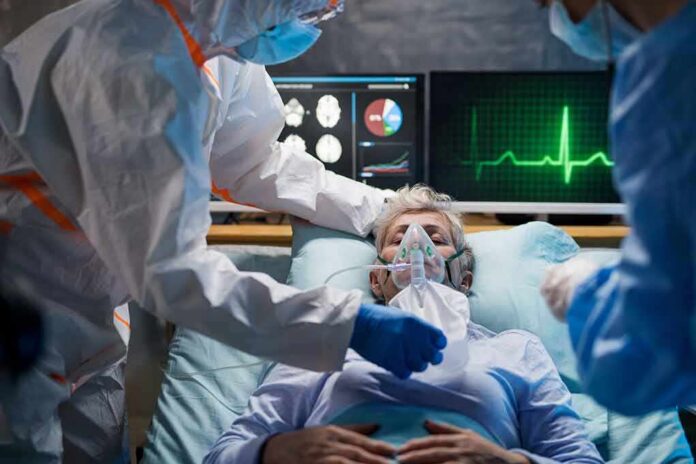
The doctor in France was moved into a negative pressure room in a specialized unit, with staff wearing full protective gear.[12][6] Health authorities launched contact tracing on people who shared close space with the doctor, especially on the flight from Congo. Those contacts will be monitored for 21 days, which covers the typical incubation period.[9][15] This system worked in past European and United States cases, where isolated patients did not spark wider outbreaks.[12][19] When detection and isolation are fast, Ebola chains usually stop at the first case.
History’s track record: scary headlines, contained reality
Imported Ebola has a long, tense history, and the pattern matters here. Since 1976, almost all Ebola cases outside Africa have involved health workers infected while treating patients, not random tourists.[18][19] Spain’s 2014 nurse case and a Dallas case in the United States made global headlines, yet strong infection-control measures stopped both events after small clusters.[18][19] A study of France’s own preparedness during the West Africa outbreak showed that evacuated Ebola patients were treated without any hospital health worker infections.[12]
Global modeling from the Centers for Disease Control and Prevention in the United States and past World Health Organization assessments found that the threat of major international spread of Ebola beyond Africa is limited, even when outbreaks inside Africa are intense.[22][24] That is not wishful thinking; it reflects how the virus moves. Ebola burns through close-contact networks, not through cities via air. Europe’s risk sits mostly in hospitals and labs, not in cafes, trains, or shopping malls.
The real crisis is in Congo, not Paris
While Europe debates risk, the real crisis unfolds in Congo’s Ituri province. The country is in its 17th Ebola outbreak, declared in May after unexplained deaths in conflict zones.[6][24] Civil war, attacks on treatment centers, and deep mistrust of authorities make it hard to isolate patients or keep contact tracers safe.[20][25] Millions have been displaced by fighting, and many will never see a proper clinic. That is the perfect environment for a virus that thrives on close care and burial rituals.
Or worse.
France reports first Ebola case after doctor returning from DR Congo tests positive | World News | Sky News https://t.co/EEFl9lR789
— Cold Warrior (@acihaveavoice) June 26, 2026
The Bundibugyo outbreak has already been labeled by health officials as the fastest-growing in Africa’s history for its early weeks.[4][24] Yet international funding for basic outbreak control in eastern Congo has dropped sharply in recent years, leaving fewer clinics and fewer trained partners on the ground.[20] That is where worry belongs: on restoring local capacity, backing honest reporting, and making sure desperate doctors are not left alone in war zones until they end up on flights back to Europe.
Sources:
[1] YouTube – Ebola detected in France – How worried should Europe be? | DW News
[4] Web – France Confirms First Ebola Case – The New York Times
[6] YouTube – France Confirms First Ebola Case Linked to Congo Outbreak
[7] Web – France Identifies Its First Case of Ebola – The New York Times
[9] Web – France reports first Congo outbreak linked Ebola case – DW.com
[12] Web – Ebola Case in France: What Irish Travellers Need to Know – TMB
[15] Web – Ebola global – World Health Organization (WHO)
[17] Web – History of Ebola Outbreaks – CDC
[18] Web – Chapter 2: Major Ebola outbreaks in Africa | Mercy Corps
[19] Web – Ebola: overview, history, origins and transmission – GOV.UK
[20] Web – What Factors Might Have Led to the Emergence of Ebola in West …
[22] Web – Ebola Outbreak: Current Situation – CDC
[24] Web – A comprehensive database of the geographic spread of past human …
[25] Web – List of Ebola outbreaks – Wikipedia