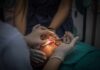
A San Diego woman went in for emergency heart surgery to save her life and came out having lost both hands and both legs.
Quick Take
- Leslie Lee had emergency surgery on April 4 to fix a tear in her aorta, the body’s main artery.
- Complications cut off blood flow to her hands and feet, leading doctors to amputate her hands at the mid-forearm and remove her legs.
- Her husband is now asking the community for help preparing their home for her return.
- Doctors say limb loss like this, while rare, is a known risk when blood flow is cut off during a major aortic emergency.
What Happened During Emergency Surgery
Leslie Lee underwent emergency surgery on April 4 to repair a tear in her aorta, according to ABC 10 News in San Diego. The aorta carries blood from the heart to the rest of the body. A tear in it is a life-threatening emergency that requires immediate action from surgeons to keep a patient alive.
During or after that operation, complications cut off blood flow to Lee’s hands and feet. Doctors ultimately amputated her hands at the mid-forearm. She also lost both legs. Her husband has been raising awareness of her condition and asking for help getting their home ready for her to return safely.
How a Torn Aorta Can Cut Off Blood to Limbs
Lee’s case fits a pattern doctors have documented for decades. When the aorta tears, a condition called aortic dissection, blood can stop reaching arteries that branch off toward the arms and legs. This is called malperfusion, and it starves limb tissue of oxygen. Left untreated too long, that tissue can die, sometimes leaving amputation as the only option.
Medical studies show limb ischemia, meaning reduced blood flow to the limbs, shows up in a meaningful share of aortic dissection cases. One study found limb ischemia in about 18 percent of proximal dissections, and every patient with upper limb ischemia in that group survived without losing a limb. Another study found the amputation rate ran near 2 percent, and most malperfusion cases improved once the main aortic repair was done. Severe outcomes like Lee’s are recognized but uncommon.
The Long Road Home After Amputation
Losing both hands and both legs forces a total rebuild of daily life. Doorways, bathrooms, kitchens, and entryways built for someone walking on two legs and gripping with two hands often need major changes. Ramps replace stairs. Roll-in showers replace tubs. Lower counters and wider hallways become necessary just to move through a house that once felt ordinary.
A San Diego woman lost her arms and legs following complications from emergency surgery, and her husband is now asking for skilled volunteers to help modify their home before she is discharged from the hospital.
— ABC 10News San Diego (@10News) August 22, 2026
These changes are rarely cheap, and families frequently turn to community support, nonprofit housing funds, or state programs built specifically for this purpose. Programs exist across the country that help cover ramps, lifts, and bathroom retrofits for people adjusting to severe disability. Lee’s husband is now navigating that same process, working to turn their family home into a place she can safely live in again after a devastating and sudden loss.
Sources:
youtube.com, stanfordhealthcare.org, pmc.ncbi.nlm.nih.gov, patient.info