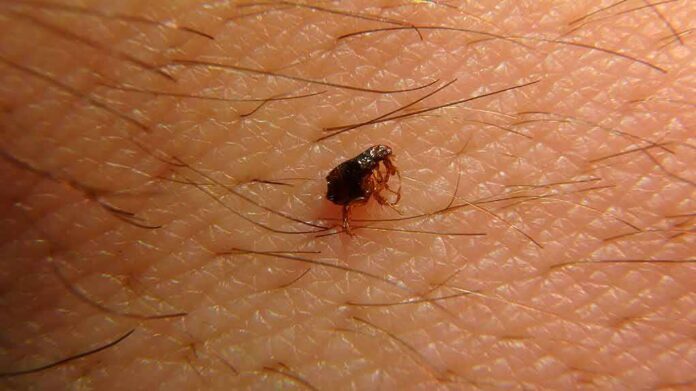
The sharp rise in emergency room visits for tick bites is real and measurable, but what it signals is less a one-off “worst ever” season than the continuation of a multi-year shift toward longer, more intense tick activity driven by ecology, climate, and human behavior.
Key Points
- CDC syndromic surveillance shows April tick-bite ER visit rates more than double the seasonal average, at their highest for this time of year since at least 2017.
- The burden is not evenly distributed: the Northeast and Upper Midwest are consistently seeing the highest per‑capita tick bite visits and tick-borne disease risk.
- Growing and spreading tick populations, milder winters, and extended tick seasons are converging with greater public awareness to drive more people into emergency care.
- CDC’s Tick Bite Tracker data are preliminary and capture ER visits for bites, not confirmed disease—but they are a valuable early warning system for personal risk and public health planning.
What the Current Data Actually Show
When CDC talks about a “worse-than-normal” tick season, it is relying on syndromic surveillance: real-time tracking of why people show up in emergency departments using chief complaint text and diagnosis codes, not laboratory-confirmed infection counts. In April 2026, about 71 out of every 100,000 ER visits nationwide were coded as tick bites—more than double the historical April average of roughly 30 per 100,000 and the highest for that calendar window since the Tick Bite Tracker began in 2017. In practical terms, that means one in about 1,400 ER encounters was for a tick bite, compared with one in about 3,300 in a typical April. This is not a trivial fluctuation; it is a clear departure from the baseline that has triggered CDC media alerts and extensive coverage.
The pattern has a strong geographic signal. CDC’s own analysis and independent reporting converge on the Northeast as the epicenter: rates there routinely exceed 100 tick-bite visits per 100,000 ER encounters in spring, more than double national averages and often several-fold higher than the South Central states. Earlier years show the same structure—2017–2019 NSSP data found mean annual incidence of 110 ED tick-bite visits per 100,000 in the Northeast versus 49 nationally. That regional concentration reflects the ecology of blacklegged ticks and the underlying burden of Lyme disease, which is markedly higher from Virginia northward into New England.
How Syndromic Surveillance Tracks Tick Season
The Tick Bite Tracker is built on the National Syndromic Surveillance Program (NSSP), a network that ingests de‑identified visit data from thousands of emergency departments in near real time. Algorithms scan chief complaint fields—phrases like “tick bite,” “tick removal,” “Lyme concern”—and map them to a standardized “tick bite” syndrome category. The system then calculates incidence per 100,000 ER visits by week and by broad region (Northeast, Midwest, Southeast, West, South Central).
This approach has two advantages: speed and sensitivity. It can flag rising tick encounters weeks before laboratory-based disease surveillance detects a surge in Lyme, anaplasmosis, or babesiosis, and it captures worried-well visits that, while not disease, reflect public anxiety and clinician workload. But it also has limitations. Coding practices vary by hospital; misclassification or under-coding can skew estimates, and aggregation by large regions masks intra-state variation. Moreover, syndromic counts tell us how many people sought help, not how many developed infection. For that, we rely on separate disease reporting systems that typically lag by months and never reach the same completeness for every pathogen.
Why Tick Encounters Are Increasing
To understand whether this is transient noise or part of a trend, you have to look beyond the ER and into the ecology of ticks and their hosts. Tick populations are not static; they respond to climate, land use, wildlife abundance, and human behavior. Multiple lines of evidence point in the same direction: more ticks, in more places, for more of the year.
First, warmer winters and earlier springs allow more ticks to survive and become active earlier. Entomologists and infectious disease experts consistently highlight climate change as a driver: shorter, milder winters reduce the kill-off of overwintering ticks, while longer warm seasons extend the questing period when nymphal and adult ticks seek hosts. At the same time, deer and small mammals that serve as hosts for ticks benefit from mild conditions, supporting larger tick populations.
Second, tick ranges are expanding. Blacklegged ticks—primary vectors of Lyme disease—have moved northward and westward into areas where they were previously rare, bringing Lyme and other pathogens into new communities. CDC and academic analyses over the past decade have documented county-level spread; what used to be a localized New England problem is now a broader swath running from the Mid‑Atlantic through the Upper Midwest.
Third, human exposure patterns have shifted. Americans are spending more time outdoors in shoulder seasons, not just summer. Recreational trails, exurban development in wooded landscapes, and backyard habitats that favor rodents and deer all increase the probability that a person or pet will brush against leaf litter or tall grass where ticks wait. Syndromic data show peaks in late spring and early summer, with a smaller fall peak; that bimodal pattern aligns precisely with nymphal and adult tick activity.
Finally, awareness itself influences ER volumes. As media coverage and public health messaging about Lyme and other tick-borne diseases have intensified, more people seek medical care sooner after a bite. Emergency physicians in multiple reports describe patients arriving with tiny, non‑engorged ticks or even just concern about possible exposure. From a prevention standpoint, that vigilance is good; from a surveillance standpoint, it inflates visit counts relative to earlier years when people might have watched and waited at home.
Ticks, Lyme Disease, and Other Infections: How Risk Translates from Bite to Illness
ER visits for tick bites are only the first step in the risk chain. The deeper concern is the burden of tick-borne disease, especially Lyme. CDC estimates roughly 476,000 Americans receive treatment for Lyme disease annually, a figure that includes both acute and some chronic manifestations. Lyme is caused by the bacterium Borrelia burgdorferi, transmitted primarily by nymphal blacklegged ticks. Transmission typically requires the tick to be attached and feeding for 24–36 hours; many ER physicians emphasize that a small, flat tick is less concerning than an engorged one that has likely fed for a day or more.
Lyme is only part of the picture. In the Southeast and parts of the Midwest, tick bites more commonly lead to illnesses such as Rocky Mountain spotted fever or ehrlichiosis, which can become severe quickly if untreated. Emerging threats like Powassan virus—which can cause encephalitis and long-term neurological damage—remain rare but illustrate how a single tick bite can have disproportionate consequences in unlucky individuals.
The absence of an approved human vaccine for any tick-borne disease in the U.S. keeps prevention squarely focused on personal behavior and environmental management. For dogs, Lyme vaccination is widely used; for humans, the toolbox is repellents, protective clothing, careful tick checks, and prompt removal.
Is This Truly a “Worst-Ever” Season?
Every spring, headlines vie for superlatives: “worst tick season in years,” “record ER visits,” “highest rate in a decade.” The 2026 data support a strong claim—higher-than-usual ER visits, at the highest level for this time of year since at least 2017—but they do not yet justify a definitive verdict on the entire season. Several factors temper the narrative.
First, the numbers are preliminary. CDC cautions that Tick Bite Tracker data may change as more facilities feed into the NSSP, and April is not the peak month in most regions; May and June typically show the highest incidence of tick-bite visits. A front‑loaded season with early high numbers may or may not sustain that intensity.
Second, ER visit rates mix exposure, anxiety, and access. A year with aggressive public messaging and local media stories can drive more people to seek care for bites that previously went unreported, even if underlying tick abundance is only modestly higher. Syndromic peaks seen in 2019 and 2025 were later viewed, with full-year data, as significant but not unprecedented once disease counts and multi-season averages were considered.
Third, there is no articulated, data-backed counter-position disputing the CDC’s specific figures; the skepticism is about interpretation, not measurement. No independent audit has shown major flaws in the Tick Bite Tracker’s methodology, and no alternative dataset has emerged with substantially lower estimates. The realistic debate is about how much weight to give these early counts in shaping public rhetoric—whether “worst-ever” language is justified or whether “higher than usual, take precautions” is a more responsible framing.
What This Means for You: Practical Implications and Prevention
For individuals, the syndromic surge translates into higher odds of encountering ticks in ordinary outdoor activities—gardening, dog walking, hiking, or even sitting on a backyard lawn abutting woods. The risk is especially pronounced if you live in or travel to the Northeast, the Upper Midwest, or heavily wooded parts of the Southeast. Age also matters: children under 10 and adults over 70 consistently show the highest incidence of tick-bite ER visits, reflecting both exposure patterns and lower thresholds for seeking care.
Prevention strategies are simple in concept but require habit: use EPA‑registered repellents containing DEET or picaridin; wear long sleeves and pants, with cuffs tucked into socks in tick‑dense areas; treat clothing with permethrin; stay in the center of trails and avoid brushing past tall grass and leaf litter; perform full-body tick checks after outdoor time, paying attention to scalp, behind ears, armpits, waistline, behind knees, and groin. Showering within two hours of coming indoors and tumble-drying clothes on high heat for about 10 minutes can help dislodge or kill ticks that have not yet attached.
If you find a tick, remove it with fine-tipped tweezers, grasping as close to the skin as possible and pulling straight up without twisting. Clean the area with soap and water. Many clinicians recommend saving the tick in a plastic bag or small container with alcohol; identification can guide risk assessment for Lyme and other infections. Seek medical attention if you develop fever, headache, fatigue, joint pain, or a spreading rash—especially the classic bull’s-eye rash of early Lyme—within days to weeks after a bite. Early antibiotic treatment is highly effective for bacterial tick-borne diseases.
Sources:
cbsnews.com, tickmitt.com, cdc.gov, abcnews.com, axios.com, instagram.com, facebook.com, publications.aap.org, washingtonpost.com, pubmed.ncbi.nlm.nih.gov, restoredcdc.org, healthline.com, unmc.edu
🔴 CDC reports highest tick-bite ER visits since 2017 as season worsens
The Centers for Disease Control and Prevention logged the highest rate of emergency room visits from tick bites since 2017 across most of the country this summer.
Rebecca Osborn, epidemiologist at the… pic.twitter.com/QJiaeAj2ZL— NewsTongue (@NewsTongueX) July 2, 2026
This is a header
This is a paragraph.